
Removals in London means a surveyed, fixed-price move carried out by an insured crew, covering packing, protection, loading, transport, unloading and reassembly.
Reallymoving figures published in November 2025 and carried by the HomeOwners Alliance put the UK average at £432 for a one-bedroom move, £603 for two bedrooms, £867 for three and £1,196 for four, with London sitting above those averages. What makes the capital different is not the distance but the access: the £12.50 daily ULEZ charge, the £18 Congestion Charge that applies from 2 January 2026, borough parking suspensions that need days of notice, and the fact that 54.0 per cent of London households live in a flat or maisonette rather than a house. A professional removals firm absorbs that administration. Check Goods in Transit cover, a written fixed price and the parking arrangement before you book.
Introduction
Removals in London are shaped by access rather than mileage. A three-mile move from Wandsworth to Clapham can take longer and cost more than a fifty-mile move between two houses with driveways, because the van has nowhere legal to stop, the lift is booked by another resident, and the staircase turns twice before the first floor. Most of the cost and almost all of the risk sit in those details. This guide sets out what a London removals service includes, what it costs in 2026, how road charges and council permits change the arithmetic, what packing options are worth paying for, and the checks that tell you whether a firm is insured and accountable. EUROBR has moved households across Greater London and the M25 since 2013.
What does a removals service in London actually include?
A full removals service in London includes a vehicle and trained crew, packing materials, protection for floors and doorways, dismantling and reassembly of furniture, loading and unloading, and the parking arrangements at both addresses. Packing itself is usually an option rather than a default.
That bundle is what separates removals from van hire. You are not renting capacity, you are buying a managed day with a single point of responsibility. EUROBR’s house and flat removals service lists a suitable van and uniformed crew, boxes and wrapping supplied, floor and doorway protection, optional packing and unpacking, furniture dismantling and reassembly, parking and bay suspension arranged for the customer, and short term storage between moving dates.
London logistics: ULEZ, the Congestion Charge and council parking
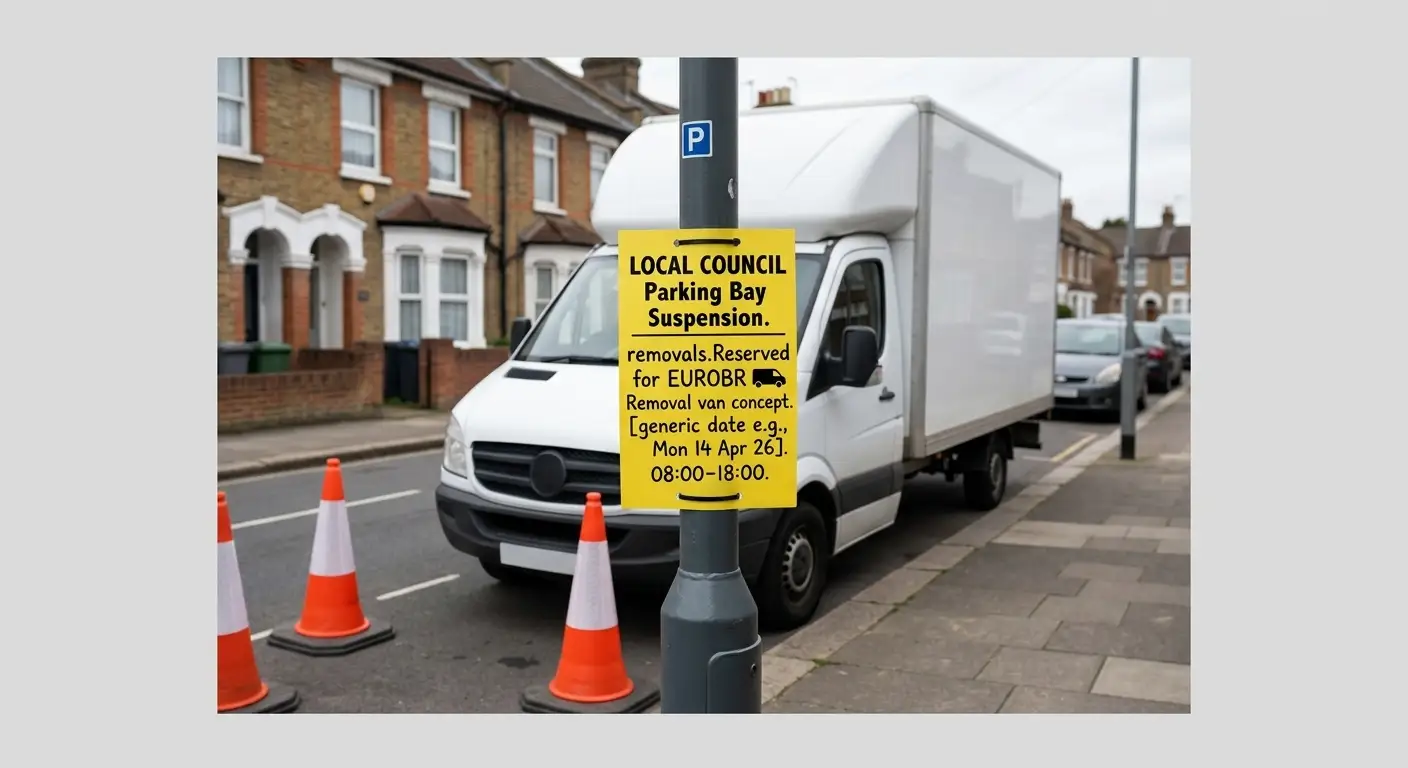
Three London-specific costs attach to a removals vehicle before it has carried anything. Understanding them lets you read a quote properly, because a price that omits them is not lower, it is incomplete.
The Ultra Low Emission Zone charge is £12.50 a day for a non-compliant vehicle. Transport for London’s ULEZ pages confirm the zone covers all London boroughs, does not include the M25 itself, and operates 24 hours a day, every day except Christmas Day. A compliant removals fleet pays nothing, so ask whether the vehicle assigned to your move is compliant.
The Congestion Charge rose from £15 to £18 a day on 2 January 2026 and runs 07:00 to 18:00 Monday to Friday and 12:00 to 18:00 at weekends and on bank holidays, according to Transport for London’s Congestion Charge pages. Miss the payment deadline and the penalty charge notice is £180, reduced to £90 if paid within 14 days.
Parking is the third and the most disruptive. On a controlled street the van needs a suspended bay or a dispensation from the borough, and boroughs want notice. EUROBR’s parking suspension page lists application routes for all 32 boroughs, with daily fees between £30 and £130 depending on the council and zone. The detail, including which boroughs need ten working days rather than five, is set out in the guide to parking suspension for moving in London.
| London cost in 2026 | Amount | When it applies |
| ULEZ daily charge | £12.50 | Non-compliant vehicle, any London borough, 24 hours a day |
| Congestion Charge | £18 per day | 07:00 to 18:00 weekdays, 12:00 to 18:00 weekends and bank holidays |
| Congestion Charge penalty | £180, or £90 within 14 days | Payment not made by the deadline |
| Council bay suspension | £30 to £130 per day | Controlled parking street, notice required |
| Waste carrier registration | £191.02, renewal £130.25 | Required of any firm removing items for disposal |
Why a local, fully insured removal company changes the outcome
A local firm prices the access correctly because it has already worked the postcode. The difference shows up in vehicle choice, crew size and the parking application, which is where London moves are won or lost.
Insurance is the second half of it. Goods in Transit insurance covers belongings while they are being carried and while they are in the vehicle. CMR is the convention that governs international carriage by road, explained on the CMR regulations page. EUROBR states Goods in Transit and CMR cover on every move, from a studio to a house, and is explicit that fragile and high-value items such as glass, ceramics, screens, jewellery and artwork, along with plants and pets, fall outside standard cover unless they are professionally packed. That condition is normal across the industry, and it is the reason professional packing changes your risk position rather than just saving you an evening.
How much do removals in London cost in 2026?
Removals in London in 2026 typically start at around £432 for a one-bedroom move and rise to roughly £1,196 for four bedrooms on national averages, with London prices sitting above the national figure because of labour costs, road charges and access constraints. A firm fixed price is produced after the volume and access at both addresses have been assessed.
The national baseline comes from reallymoving data of November 2025, published in the HomeOwners Alliance guide to removal costs, which was last updated on 6 January 2026.
Estimated costs from a one-bedroom flat to a four-bedroom house
| Property size | UK average removal cost | What usually drives the London premium |
| 1 bedroom | £432 | Floor level, no lift, controlled parking |
| 2 bedrooms | £603 | Volume plus stair carries at one or both ends |
| 3 bedrooms | £867 | Crew size, longer loading window, packing |
| 4 bedrooms | £1,196 | Two vehicles or two trips, full packing service |
| 5 bedrooms | £1,590 | Crew size, specialist items, extended day |
Those are averages rather than quotes, and they exclude packing. The HomeOwners Alliance guide puts a full packing service for a three-bedroom property at around £400 to £500, with fragile items sometimes charged separately. Borough-level cost detail, including the council fees that vary most between zones, is set out in the local guides for house removals in Wandsworth and removals in Richmond.
Hidden fees to watch for: distance, stair access and waiting time
A quote is only comparable if you know what it excludes. Six items account for most of the gap between the number you were given and the number you paid.
- Stair access: each floor without a lift adds carrying time, and the effect compounds above the second floor because every item travels separately.
- Waiting time: if keys are late, the lift is occupied or the previous occupant has not finished, the crew is still on site and still being paid.
- Distance and second trips: a van that has to return doubles the driving, which is the most expensive way to buy time.
- Long carries: where the van cannot park within a short distance of the door, some firms charge a long carry fee by the metre.
- Road charges: ULEZ and the Congestion Charge, if the vehicle or the route attracts them.
- Disposal: removing unwanted furniture or white goods is a separate, licensed activity with its own fee.
Ask for each of these to be named in writing. EUROBR assesses volume, access, floor levels and parking at both addresses and then holds the figure, which is the mechanism that stops the price moving on the day.
Do removal companies in London pack for you?
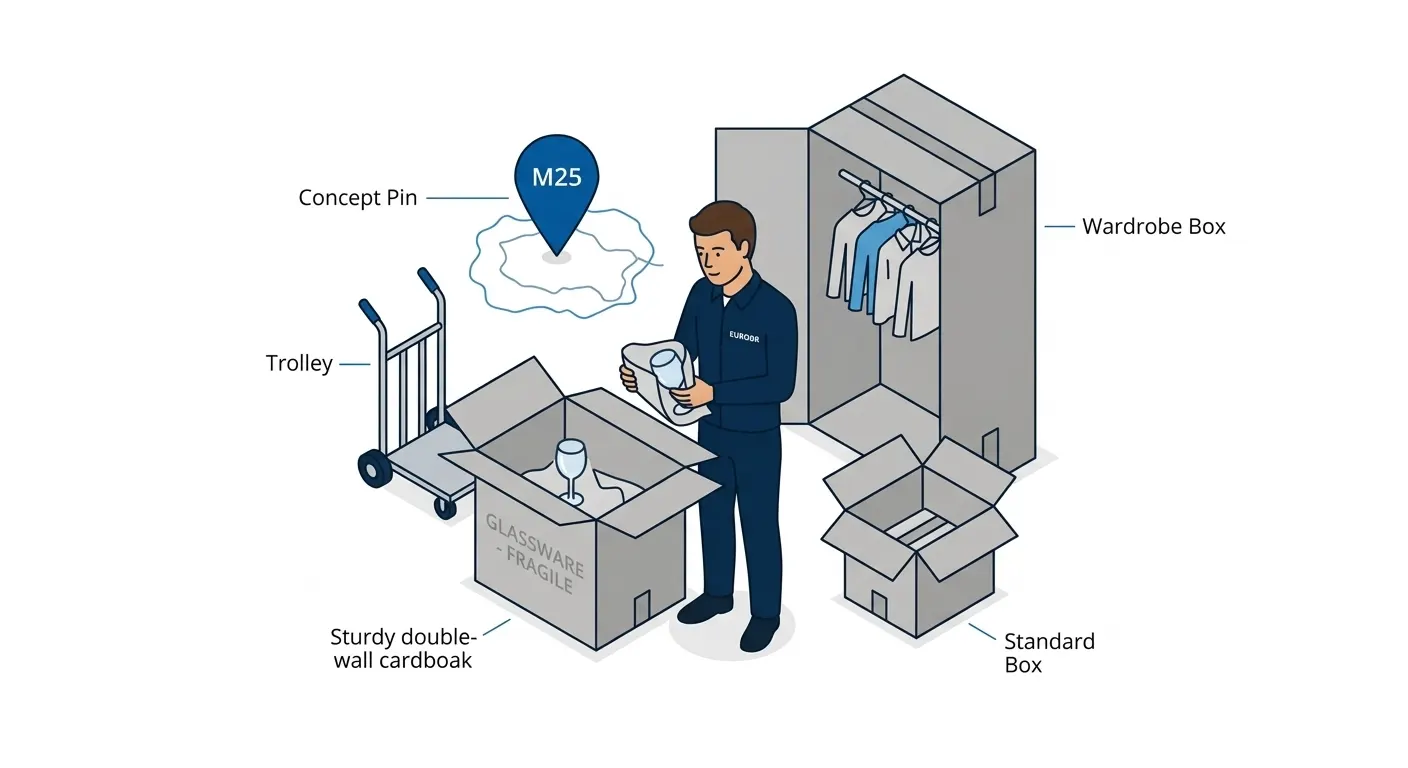
Yes. Most London removals firms offer full packing, part packing or materials only, and the choice is usually a trade-off between cost and insurance cover rather than between convenience and thrift.
EUROBR’s packing services and materials page lists full packing, part packing and materials only, with small, medium, large, double wall, wardrobe, picture, mirror and television boxes, plus bubble wrap, paper, tape, covers and labels.
Full packing or fragile-only packing: which suits your budget
Full packing means the crew packs everything, usually the day before the move. Part packing, often called fragile-only, means the crew packs kitchenware, glass, artwork and electronics while you handle clothes, books and linen.
Fragile-only is the better value option for most households, because it targets the spend at the items that break and the items that insurers exclude when the customer packs them. A three-bedroom full pack at around £400 to £500 buys back a day of your time; a fragile-only pack costs materially less and covers the same risk. Box selection matters either way, and the guide to the best packing box sizes for moving house explains why a double wall box is not interchangeable with a standard one. A fuller comparison of the three levels, with 2026 cost ranges, is set out in the guide to professional packing services in London.
What a removals crew cannot pack or carry
Some categories are excluded by law, by insurance or by both, and finding out on the morning is a delay you cannot recover.
- Hazardous goods: petrol, gas canisters, paint thinners, fireworks, aerosols under pressure.
- Perishable food and open freezer contents.
- Plants and pets, which are excluded from standard Goods in Transit cover.
- Cash, passports, jewellery and documents, which should travel with you.
- Prescription medicines, for the same reason.
Anything unusual, heavy or high-value needs to be declared at quote stage rather than mentioned on the day. A piano is the clearest example, because it changes crew size, equipment and route planning, as explained in the guide to piano removals in London.
Furniture dismantling and reassembly
Dismantling and reassembly is normally part of a full removals booking rather than an extra. Beds, wardrobes, large tables and modular shelving come apart at collection and go back together at the destination.
The value is not only labour. Flat pack furniture that is carried assembled through a tight London staircase is where most damage happens, and reassembly by the same crew that dismantled it means the fixings are kept together and the order is known. If you need assembly without a move, for example after a delivery, EUROBR’s furniture assembly and delivery service covers it separately, with per-item and hourly pricing explained there.
What size of move needs a full removals team rather than a van?
A full removals team becomes the cheaper option at roughly two bedrooms, or wherever a fixed deadline, a lift booking or fragile contents make an overrun expensive. Below that, a man and van usually wins on price.
The switch point is not really about volume, it is about who carries the risk of the day running long. An hourly booking passes that risk to you. A surveyed fixed price passes it to the contractor.
| Situation | Better fit | Why |
| Studio or single item | Man and van | Load fits one vehicle, no survey needed |
| 1 bedroom, flexible timing | Man and van | Hourly rate beats a fixed-price contract on small volumes |
| 1 bedroom, fixed key handover | Full removals | Deadline risk outweighs the hourly saving |
| 2 bedrooms and above | Full removals | Crew size and materials included, single trip |
| Fragile or high-value contents | Full removals with packing | Professional packing is a condition of cover |
| Office or IT equipment | Specialist relocation | Different insurance, inventory and out-of-hours working |
The van option is set out in detail in the guide to man and van services in London, and business moves are covered by the office and IT relocation service.
How does the moving process work from quote to unloading?
A London removals job runs in four stages: an assessment of volume and access, a fixed written price, the move day itself, and unloading with reassembly at the destination. Each stage exists to remove a variable before it becomes a cost.
The reason the sequence matters is that almost every moving-day failure traces back to something not established at stage one.
Stage one: the assessment and the fixed price
The assessment establishes volume, access, floor levels and parking at both addresses. Those four variables set the vehicle, the crew size, the time on site and the parking application.
EUROBR does not publish fixed rates by room count, because the same two-bedroom flat can be a three-hour job or a seven-hour job depending on the staircase. The assessment produces a clear fixed price, and holding that price is the commitment that matters: it means an unexpected flight of stairs is the contractor’s problem, not an invoice line. Be thorough when you describe the property. An under-described move is the most common cause of a price changing on the day.
Stage two: move day, protection and insurance
On the day the crew protects floors and doorways, wraps furniture, loads to a plan rather than by what comes to hand, and works to the parking window that was booked.
Insurance applies throughout. Goods in Transit and CMR cover apply to every EUROBR move, with defined limits and conditions, including the packing standard required for fragile and high-value items to be covered at all. Ask for the limit per claim and the limit per item in writing. Manual handling is also the largest single category of reportable workplace injury in the UK: HSE statistics for 2024/25 record 59,219 non-fatal injuries reported by employers under RIDDOR, 17 per cent of them from handling, lifting or carrying. The HSE guidance on manual handling law places that duty on the employer, which is why customers are asked not to carry alongside the crew.
Stage three: unloading, reassembly and settling in
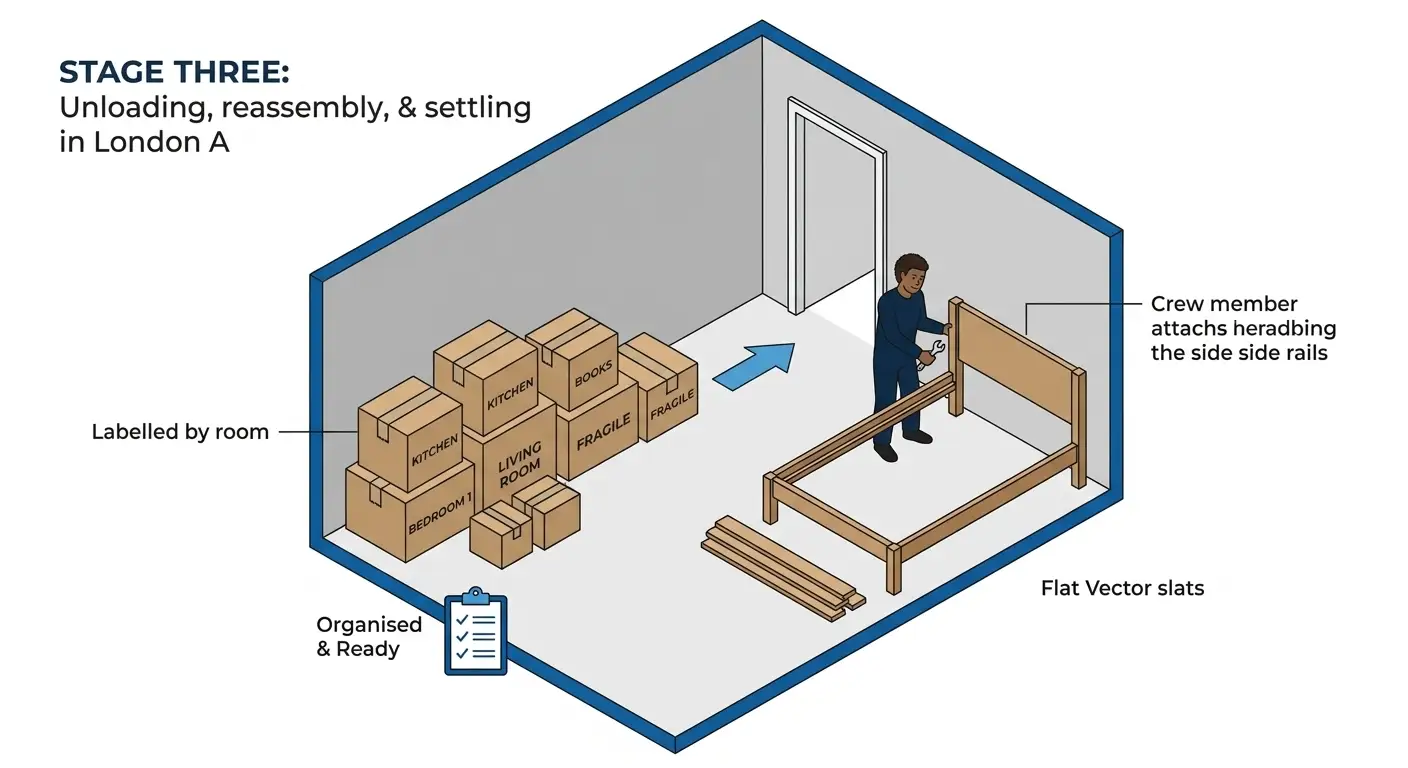
Unloading is faster and cheaper when boxes are labelled by destination room rather than by contents. The crew places each box where it belongs, reassembles furniture, and removes the packing debris if that was agreed at quote stage.
Two things are worth arranging before the van arrives at the new address. The first is parking, which people consistently arrange at the collection end and forget at the delivery end. The second is a decision about what is not coming with you, because unwanted furniture and white goods need a licensed carrier rather than a skip on the pavement, as set out in the guide to house clearance in London.
When should you book removals in London?
Book two to four weeks ahead for a standard move, and earlier if your date falls at the end of the month or on a Friday. The binding constraint is often the council parking suspension rather than the removals firm’s diary.
Three dates compete for the same capacity across London. Tenancy end dates cluster on the last working day of the month. Property completions cluster on Fridays. University terms move students in and out in concentrated weeks, which is covered in the guide to student removals in London. If your move falls into any of those windows, book first and confirm details later.
Renters have an additional deadline. Deposit deductions are most often driven by cleaning and by items left behind, so the clearance and cleaning plan needs to sit inside the same week as the move. The sequence is set out in the guide to end of tenancy removals in London and in the moving checklist. Where a date slips and you need capacity at short notice, same day man and van in London explains what is realistic.
How do you check a London removal company before booking?
Check four things: insurance in writing, a written fixed price with the exclusions named, a traceable business identity, and a waste carrier registration if anything is being taken away. Each takes minutes and each removes a category of risk.
London’s removals market includes established firms and informal operators advertising the same service at very different prices. The gap is almost always insurance and accountability rather than skill.
- Insurance: ask for the Goods in Transit limit per claim and per item, and the packing conditions attached to fragile goods.
- Written quote: it should name the business, give an address, state the price, list inclusions, and say what happens if the job overruns.
- Business identity: a company number, a VAT number and a fixed address, not only a mobile number.
- Waste carrier registration: required for any firm removing items for disposal, verifiable on the Environment Agency public register of waste carriers.
- Standards: the British Association of Removers requires annual external audit and a code of practice approved by the Chartered Trading Standards Institute, which is a useful benchmark even for non-members.
- Reviews: look for detail about access and timing rather than star counts alone.
An independent preparation list worth reading alongside this is the Which? moving house checklist. EUROBR’s credentials, including 12 years operating from Croydon, are set out on the about us page.
What happens if something is damaged or the move overruns?
Report damage in writing as soon as it is found, before items are moved again or packaging is discarded, and refer to the Goods in Transit policy rather than to goodwill. Overruns are governed by what the written quote says about time, which is why that clause matters.
Under the Consumer Rights Act 2015, a service must be carried out with reasonable care and skill, and Citizens Advice guidance on complaining about a service explains how to raise a claim if it is not. In practice, most disputes in removals come down to three questions: was the item professionally packed, was its value declared at quote stage, and was the damage reported before the evidence was cleared away. Photograph anything valuable before it is wrapped. The most frequent avoidable problems are catalogued in the guide to 10 mistakes people make when moving house.
Frequently asked questions about removals in London
How much do removals in London cost for a two-bedroom flat?
Reallymoving data from November 2025, published by the HomeOwners Alliance and last updated on 6 January 2026, puts the UK average for a two-bedroom removal at £603, with one bedroom at £432 and three bedrooms at £867. London prices sit above those national averages because labour costs more, access is harder and road charges apply. The variables that move a two-bedroom quote most are floor level and lift availability, the distance the crew has to carry between the door and the vehicle, whether a council bay suspension is needed, and whether packing is included. A two-bedroom flat on a third floor without a lift can cost substantially more than the same contents on a ground floor half a mile away. Packing is usually quoted separately, with a full three-bedroom pack running to roughly £400 to £500. Because the figures above are averages rather than quotes, the reliable number comes from an assessment of volume and access at both addresses, which is how the house and flat removals service is priced.
Do I need a parking permit for a removal van in London?
On a controlled parking street, yes. A removals vehicle needs either a suspended bay, which reserves the space outright, or a dispensation, which permits waiting where waiting would otherwise be restricted. Which one applies depends on the borough and the type of restriction outside the address. Notice periods vary: many London councils ask for around five working days, several ask for ten, and fees across the 32 boroughs run from roughly £30 to £130 per day depending on the zone. Without a suspension the crew may have to carry belongings a long distance, or risk a penalty charge notice, and both outcomes cost more than the application fee. The arrangement is needed at both addresses, not only at the collection point, which is the step most people miss. Applications are made to the borough, and the routes for all 32 councils are listed on the parking suspension page, with the process explained in the guide to parking suspension for moving in London.
Are removal companies in London insured for damage?
Established firms carry Goods in Transit insurance, which covers belongings while they are being carried and while they are in the vehicle, and many also carry public liability insurance, which covers damage the crew causes to the building itself. The two are separate policies and cover different risks, so both are worth asking about. Goods in Transit cover carries conditions that matter more than the headline limit. Fragile and high-value categories, typically glass, ceramics, screens, jewellery and artwork, along with plants and pets, usually fall outside standard cover unless they are professionally packed, and items packed by the customer are frequently excluded. High-value items generally need to be declared at quote stage to be covered at their real value. The questions to ask in writing are the limit per claim, the limit per item and the packing standard required. EUROBR states Goods in Transit and CMR cover on every move, with CMR explained on the CMR regulations page.
How far in advance should I book a removal company in London?
Two to four weeks is the working answer for a standard London move, and longer if the date falls at the end of a month or on a Friday, when tenancy ends and property completions concentrate demand. The binding constraint is frequently not the removals diary but the council parking suspension, which can need up to ten working days’ notice depending on the borough, so the permit timetable should drive the booking date. Buildings add their own calendar: managed blocks often require a service lift to be booked and may restrict loading to certain hours, and some estates need access codes or a security notification in advance. Student moves cluster into a few weeks at the start and end of terms, which tightens capacity further. Booking early also tends to produce a better price, because a supplier planning weeks ahead can route the job efficiently. Where a date slips, short-notice options are covered in the guide to same day man and van in London.
Do removal companies pack for you, and is it worth paying for?
Most London firms offer three levels: full packing, part packing (often called fragile-only) and materials only. Full packing usually happens the day before the move and covers the entire contents. Fragile-only targets kitchenware, glass, artwork and electronics while the household handles clothes, books and linen. Materials only supplies boxes, tape, bubble wrap and covers for a self-pack. Cost is one reason to choose, but insurance is the stronger one. Goods in Transit policies commonly exclude fragile items that the customer packed, so professional packing is often the condition on which cover for those items depends rather than a convenience. The HomeOwners Alliance puts a full three-bedroom pack at roughly £400 to £500, with fragile items sometimes charged separately. For most households, fragile-only concentrates the spend where the risk actually sits, because clothes and linen rarely break while glassware and screens routinely do. Timing is the other consideration: a full pack needs the crew on site the day before, which suits a weekday completion but is harder to arrange around a Friday key handover. The options, including box types and materials supplied, are set out on the packing services and materials page.
What does ULEZ and the Congestion Charge add to a London move?
Two separate daily charges can apply to a removals vehicle in 2026. The Ultra Low Emission Zone charge is £12.50 per day for a non-compliant vehicle, applies across all London boroughs, stops short of the M25 itself, and runs 24 hours a day every day except Christmas Day. Most professional removals fleets meet the emissions standard, in which case nothing is payable, so it is worth asking whether the vehicle assigned to the move is compliant. The Congestion Charge is separate and geographic: it rose from £15 to £18 per day on 2 January 2026 and applies between 07:00 and 18:00 Monday to Friday and between 12:00 and 18:00 at weekends and on bank holidays, within the central zone only. Missing the payment deadline results in a penalty charge notice of £180, reduced to £90 if settled within 14 days. Neither charge is optional, so a quote that omits them is incomplete rather than cheaper. How those charges feed into a quote is set out in the guide to man and van services in London.
Can a removals company take away furniture I no longer want?
Only a firm holding a valid waste carrier registration may take items away for disposal, and the householder carries a legal duty to check. If furniture or white goods are later fly-tipped and traced back to the address they came from, enforcement can follow even where the householder did not dump them. Verification is quick: ask for the registration number and search it on the Environment Agency public register of waste carriers, brokers and dealers. Upper tier registration costs £191.02 in 2026, with a £130.25 renewal every three years, and operating without registration can attract an unlimited fine. Disposal is normally charged separately from the move itself, because recycling centres charge by load or by item category, and some materials, notably upholstered seating, are subject to additional handling rules. Booking clearance as part of the same day is usually cheaper than arranging it separately afterwards. The process and the 2026 cost ranges are set out in the guide to house clearance in London.
Planning your London move: the next step
The three decisions that shape a London move are the vehicle and crew size, the packing level, and the parking arrangement at both addresses. Settle those and the day becomes predictable. Leave any of them to the morning and the cost becomes whatever the delay turns out to be.
EUROBR has run household removals across Greater London and the M25 since 2013, with Goods in Transit and CMR cover on every move, a registered waste carrier licence for anything taken away, and a fixed price held from quote to completion once volume, access and parking have been assessed. Tell the team the two postcodes, the floor levels and roughly how many boxes you expect, and you will get a clear figure rather than a range. Message on WhatsApp at +44 7878 921856 or request a quote online.