
A man and van in London is a small-scale removals service: one driver with a van, optional extra helpers, and a price set by the hour or as a fixed job.
It suits studio, one and two bedroom moves, single-item deliveries and end of tenancy clear-outs, and costs less than a full removals crew because both the vehicle and the team are smaller.
Before booking, check three things:
- The company holds Goods in Transit insurance and can show its policy details
- The quote states whether the Congestion Charge, ULEZ, parking and waiting time are included
- Access at both addresses has been discussed, including stairs, lifts and where the van can stop
As of 2026, the Congestion Charge is £18 a day in central London and the ULEZ charge is £12.50 a day for a non-compliant van.
Introduction
Booking a man and van in London should be the simplest part of moving, and for most people it causes the most doubt. In London, 28% of households were private renters in 2024-25, against 17% in the rest of England, according to the English Housing Survey, and renters move far more often than owners. The market is crowded, quotes arrive in different formats, and the cheapest hourly rate on a comparison site often excludes the things that cost money on the day: parking, waiting time, stairs and driving charges. This guide explains what the service includes, how a reliable quote is built, what London’s road and parking rules mean for your move, and how to check a company is insured and licensed. It covers moves inside Greater London and the M25, where access, not distance, is the real variable.
What does a man and van service in London include?
A man and van service is a removal carried out by one driver and a single van, with extra crew added when the job needs it. Loading, transporting and unloading between two addresses is the core, and the van plus the driver’s labour makes up the base price.
The vehicle matters more than most people expect. A long-wheelbase transit handles a studio or small one bedroom flat, while a Luton van with a tail lift suits a full one or two bedroom flat, because the extra height makes tall furniture and stacked boxes practical. A van that is slightly too small is expensive, since a second trip adds a full journey across London to the bill.
What is usually included
- The van, fuel and the driver’s time on site
- Loading and unloading, with straps and blankets to secure the load
- Standard Goods in Transit cover, subject to policy terms
What is often charged separately
- Packing labour and materials, if you have not packed
- Dismantling and reassembling furniture such as beds and wardrobes
- Extra crew for heavy or awkward items such as pianos and appliances
- The Congestion Charge, the ULEZ charge, tolls and parking fees
- Waiting time, if the property or keys are not ready on arrival
The EUROBR man and van service in London itemises these on the quote rather than adding them afterwards, which is worth asking any company to do.
When is a man and van the right choice, and when is it not?
A man and van is the right choice when the volume fits one van and the job can be completed in a single day. Beyond that point, a full removals crew is usually faster and often cheaper per item, because more hands reduce the hours charged.
The dividing line is volume and access combined. A one bedroom flat on the ground floor is a straightforward man and van job. The same flat on a fourth floor with no lift is not, because carrying boxes down four flights takes several times longer than the van journey.
| Situation | Man and van | Full removals crew |
| Studio or one bedroom flat, good access | Suitable | Usually unnecessary |
| Two bedroom flat, stairs, no lift | Possible with extra crew | Often faster overall |
| Three bedrooms or more | Not suitable | Suitable |
| Single item or furniture delivery | Suitable | Not cost-effective |
| Office or IT relocation | Small offices only | Suitable |
Larger household moves are better handled as house and flat removals, and business moves belong with an office and IT relocation team, where downtime matters more than van size.
How is a man and van quote in London put together?
A man and van quote is built from three inputs: the time the job takes, the size of van required, and the extras that apply to your addresses. Hourly pricing and fixed pricing are two ways of packaging the same inputs, not two different services.
Hourly pricing suits jobs where the volume is clear but the timing is not, such as a small flat move where you are still finishing the packing. Fixed pricing suits jobs where the company can see the whole scope in advance, usually after a video survey or an item list, and it protects you from paying for slow traffic. What matters is that the basis is written down: the minimum hours, chargeable time, and what happens if the job overruns.
For price ranges by move size, the EUROBR 2026 man with a van price guide sets out typical figures and the factors behind them.
The extras that change the final figure
- Access at both ends. Stairs, no lift, long carries and restricted loading times add labour hours.
- Timing. Fridays and the last weekend of the month are the busiest slots in London.
- Waiting time. Delayed keys on completion day are common and almost always chargeable.
- Driving charges. These are set by Transport for London, not the removals company.
What do ULEZ, the Congestion Charge and parking penalties add to a move?
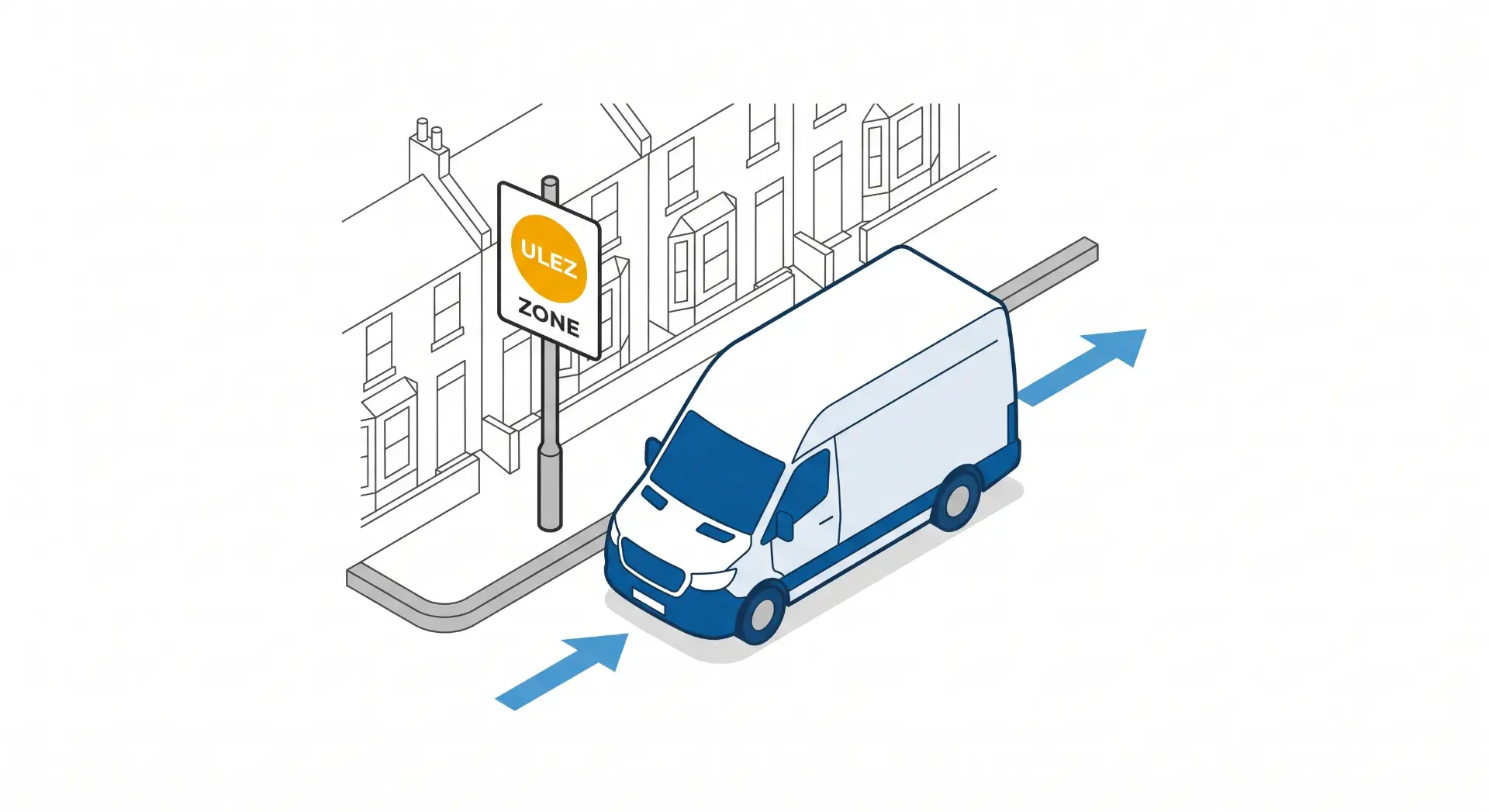
London’s driving charges apply to removal vans exactly as to any other vehicle, and they are the most common source of surprise on a moving invoice. As of 2026 there are three separate costs, which can apply together.
ULEZ stands for Ultra Low Emission Zone. It covers all London boroughs, operates 24 hours a day except on Christmas Day, and charges £12.50 a day for vehicles up to 3.5 tonnes that fail the emission standards, so a compliant van pays nothing. The Congestion Charge is separate: a daily charge for driving inside the central zone during charging hours, raised from £15 to £18 on 2 January 2026.
| Charge (2026) | Amount | Where and when it applies |
| ULEZ | £12.50 per day | All London boroughs, 24 hours, non-compliant vehicles only |
| Congestion Charge | £18 per day | Central zone, 07:00 to 18:00 Monday to Friday, 12:00 to 18:00 weekends and bank holidays |
| Parking penalty, higher level Band A | £160, or £80 within 14 days | Borough streets, levels set 7 April 2025 |
| Parking penalty, higher level Band B | £140, or £70 within 14 days | Band B areas, levels set 7 April 2025 |
Sources: Transport for London (ULEZ and Congestion Charge); London Councils (penalty levels, 7 April 2025).
A move from Croydon to Wandsworth touches neither the Congestion Charge zone nor, with a compliant van, the ULEZ charge. A move into Bloomsbury on a Tuesday morning attracts the Congestion Charge. Ask which of these your quote assumes, because a company that plans the route around them has also thought about your timings.
How do you avoid parking problems on moving day?
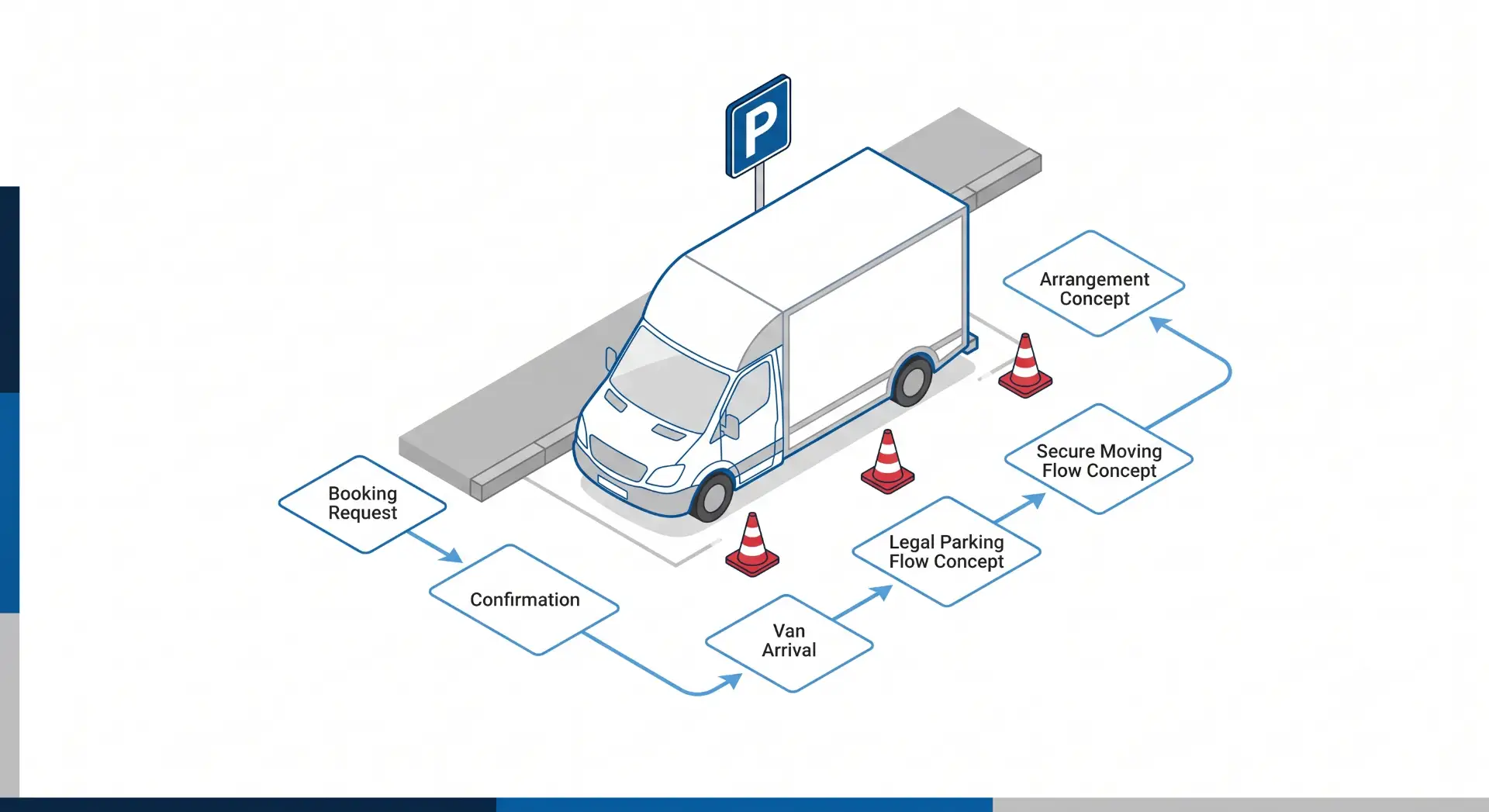
The most reliable way to protect a moving slot in London is to arrange a parking bay suspension with the local council in advance, so the van has a legal, reserved space outside the address. A suspension is a temporary reservation of controlled bays, applied for through the borough, which usually needs several working days’ notice.
Without a reserved bay, the crew either waits for a space, parks further away and carries everything the extra distance, or risks a penalty charge notice at the levels above. In 12 years of moving London households, the EUROBR team finds that parking access arranged too late is the most common cause of a moving day running past its slot.
How the application works, borough by borough, is set out on the EUROBR parking suspension page and in the guide to parking suspension for moving in London. If your street has a red route, a bus lane or a market day restriction, mention it when you request a quote rather than on the morning itself.
How do you check a man and van company before booking?
Checking a London mover takes ten minutes and rests on three verifiable things: insurance, licensing and a written quote. Reviews are useful, but the weakest signal, because they are the easiest to fake.
Insurance: Goods in Transit and CMR
Goods in Transit insurance covers your belongings while the company carries and handles them. CMR insurance is the equivalent cover for international road transport under the CMR convention, so it matters when goods leave the UK. Ask for the cover level and read what is excluded: many policies exclude items packed by the customer, as well as glass, ceramics, artwork and jewellery. That is normal across the industry, and a good reason to have fragile items packed professionally.
Licensing and standards
A company that removes unwanted items as part of a clearance must be registered with the Environment Agency as a waste carrier, and the public register is searchable by business name. Ask for the registration number and check it. The British Association of Removers also runs a Chartered Trading Standards Institute approved code of practice for member firms, a useful reference for what a written quote should contain.
The written quote
- A named company, a real address and a company number
- The van size, the number of crew and the minimum hours
- A clear statement on the Congestion Charge, ULEZ, parking and waiting time
- Payment terms and the cancellation policy
How do you prepare so the booking runs to time?
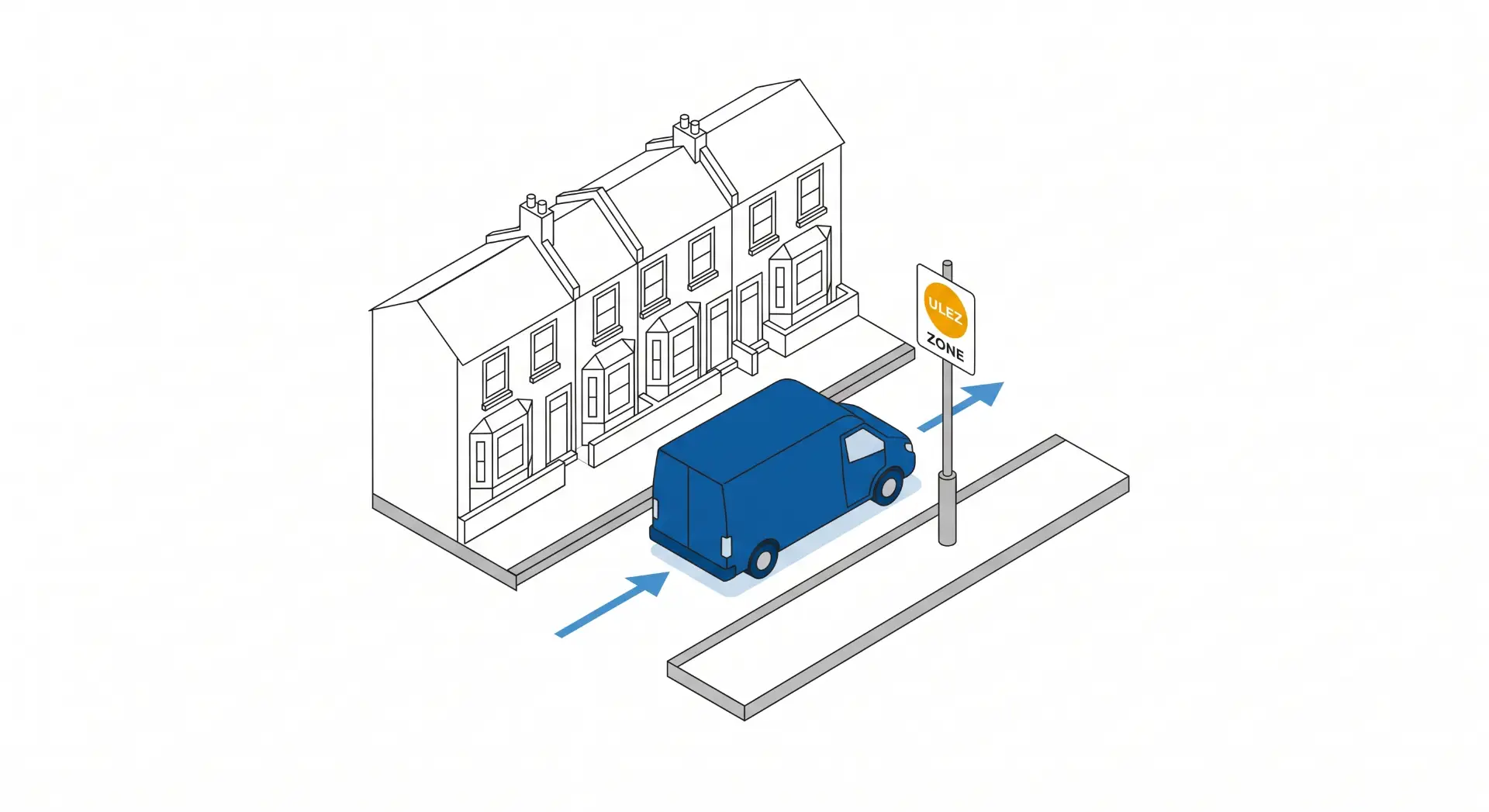
Preparation turns a quoted time into an actual time. The crew controls loading, driving and unloading; you control whether the boxes are sealed and the wardrobe is empty when the van arrives.
Label boxes on the side rather than the top, so labels stay readable when boxes are stacked. Use double-wall boxes for books and kitchenware, since collapsed boxes cause delays and damage. The guide to packing box sizes for moving house covers which size suits which contents, and a professional packing service is worth costing if you are leaving a tenancy on the day the keys are due.
Beds, wardrobes and desks should be dismantled before the crew arrives unless you have booked furniture assembly and delivery. The EUROBR moving checklist sets out the sequence week by week, and the guide to common mistakes when moving house covers the errors that push a move into a second trip. If you are leaving a tenancy, photograph each room once the van has gone: the approved deposit schemes resolve disputes on evidence of condition.
Frequently asked questions about man and van services in London
How much does a man and van cost in London?
The cost of a man and van in London depends on the size of the van, the number of crew, the hours the job takes and the extras that apply at each address, so quotes are ranges rather than fixed figures until the scope is known. Hourly pricing is common for small and medium moves, while fixed prices are usually offered once a company has seen an item list or completed a video survey. The variables that move the figure most are access and timing: stairs without a lift, long carries to the door, restricted loading windows, and Friday or end of month bookings all add labour hours. Driving charges are separate, since the Congestion Charge and ULEZ are set by Transport for London and passed on at cost, and waiting time for delayed keys is normally chargeable. Typical figures by move size are set out in the 2026 man with a van price guide.
How long does a man and van move take in London?
Most single-van moves inside Greater London take between two and six hours from arrival to completion, though the range is wide because loading and unloading, rather than driving, take up most of the time. A studio flat with everything boxed and ready at ground level can be finished in around two to three hours. A one or two bedroom flat with stairs, furniture to dismantle and packing still under way can run to a full working day. Traffic matters less than most people assume for moves within the same part of London, while access at both ends matters a great deal: a fourth-floor flat with no lift can double the labour time for the same volume. Other factors include how far the van parks from the entrance, whether the lift can be booked in a managed block, and whether keys are released on time. Working through a structured moving checklist beforehand keeps the estimate and the reality close together.
Can a man and van move a single item of furniture?
Yes, single-item transport is one of the most common uses of a man and van service in London, covering sofas, wardrobes, beds, white goods and marketplace or flat-pack purchases collected from a shop or a seller. The job is usually priced as a short fixed booking rather than by the hour, since the scope is predictable. What changes the price is handling rather than distance: whether the item needs two people, whether it fits through the doorway and stairwell undismantled, and whether there is somewhere legal for the van to stop. Large sofas and corner units often need legs removed or doors taken off their hinges, which is worth checking at the booking stage. Measuring the item and the narrowest point of the route into the property avoids the most common failure, which is a piece that cannot physically enter the room it was bought for. Dismantling and reassembly can be added through a furniture assembly and delivery service.
Do you need a parking permit for a removal van in London?
In many London streets, yes. Where parking is controlled by a borough, a removal van has no automatic right to stop, and the usual solution is a parking bay suspension, which temporarily reserves specific bays outside an address for the day of the move. Applications go to the borough council, carry a fee that varies by area, and generally need several working days’ notice, so this is arranged at the booking stage. Some boroughs also issue dispensations for loading in restricted locations, while red routes, bus lanes and market streets have separate rules. The cost of skipping the step is either lost time, if the crew carries belongings from a distant legal space, or a penalty charge notice, which under the London Councils bands introduced on 7 April 2025 reaches £160 at the higher level in Band A areas, reduced to £80 if paid within 14 days. Borough guidance is set out on the parking suspension page.
What does Goods in Transit insurance actually cover?
Goods in Transit insurance covers loss of or damage to belongings while they are in the care of the removals company during loading, transport and unloading. It is the standard cover in UK removals, and its value lies in the detail rather than the headline figure. Policies normally state a maximum sum insured per load, which is why an item list is requested in advance for higher-value moves. Common exclusions across the industry include items packed by the customer rather than by the crew, and categories such as glass, ceramics, mirrors, artwork, jewellery and electronic screens. Cover for scratches and marks on furniture is also frequently limited. For international road journeys, the equivalent protection is CMR insurance, which operates under the international convention on carriage of goods by road and applies on routes such as removals to Portugal. Asking for the cover level and the exclusion list in writing makes a future claim predictable.
Do you pay the ULEZ and Congestion Charge on a London move?
It depends on the route and the van. The ULEZ charge of £12.50 a day applies across all London boroughs, 24 hours a day, but only to vehicles up to 3.5 tonnes that fail the emission standards, so a compliant modern removal van pays nothing wherever it travels. The Congestion Charge is different: it applies to almost all vehicles entering the central zone during charging hours, which in 2026 run from 07:00 to 18:00 Monday to Friday and 12:00 to 18:00 at weekends and on bank holidays. Transport for London raised it from £15 to £18 a day on 2 January 2026, with a higher rate for payments made after the day of travel. Both charges are set by Transport for London rather than by the removals company, and are usually passed on at cost. A move that stays within outer boroughs attracts neither. How a quote treats them is covered on the man and van service page.
Booking your London move with EUROBR
Choosing a man and van in London comes down to matching the van and crew to the real volume, understanding which costs sit inside the quote, and arranging parking access early. A company that asks about stairs, lifts and loading restrictions before quoting intends to finish on time.
EUROBR has moved London households since 2013, covers Greater London and the M25, and is fully insured with Goods in Transit and CMR cover, as well as a licensed waste carrier registered with the Environment Agency. The team speaks English and Portuguese, and the same crews handle removals to Brazil and Europe if your move continues beyond London. Read more about the team before booking.
Moving in London soon? Get a free, no-obligation quote from EUROBR’s insured team. Message on WhatsApp at +44 7878 921856 or request a price online for an itemised figure with the van size, crew and any charges set out clearly.