

A man with a van in London is a small removals service built around one van and a driver, usually with a second crew member, hired by the hour or on a fixed price for a defined job.
In 2026, Checkatrade puts the national average at about £64 an hour for one operative and £78 an hour for two, with London and the South East sitting at the top of those ranges. EUROBR publishes starting prices of £50 for a single item, £125 for a studio and £165 for a one bedroom move, plus VAT. The figures that catch people out are not the hourly rate but the extras: the £18 Congestion Charge, the £12.50 ULEZ charge, parking suspensions from £30 to £130 a day, and the waiting time that stairs and unready boxes create.
Booking a man with a van in London is straightforward once you know three things: how much you are moving, where the van can legally stop at both ends, and whether the operator carries Goods in Transit and CMR cover. This guide works through all three, with 2026 prices and the London specific charges that decide the final bill. It also explains where the service stops being the cheaper option and a full house and flat removals crew works out better value. The aim is simple: you should be able to read a quote and know exactly what you are paying for before the van is booked.
How does a man with a van service work in London?
A man with a van service is a single van, a driver and usually one extra pair of hands, sent to move a defined load between two addresses. The booking is made either by the hour, with a minimum charge, or as a fixed price once the operator knows the volume, the access and the distance.
The practical shape of the job is the same across London. The van arrives in a booked window, the crew loads what is ready, drives the route, and unloads into the rooms you point them to. Most operators will carry items down stairs and into a flat, but they are not a packing service unless you book one, and they are not insured to move what they did not handle. EUROBR’s man and van service in London publishes same day, late hours, weekend and bank holiday availability, which matters in a city where tenancy dates rarely land on a convenient Tuesday.
Man with a van or a full removals company: what is the difference?
The difference is scale, staffing and what the crew is contracted to do. A man with a van moves a load that fits in one vehicle, in one or two runs, with a crew of one or two. A full removals company sends a larger vehicle, a crew of three or more, and takes responsibility for packing, dismantling, protecting and reassembling as part of the job.
The line usually falls somewhere between a one bedroom flat and a two bedroom flat. Below that, a van and two people will finish inside a morning. Above it, a single van means repeat runs, and repeat runs across London cost more in hours and road charges than sending a bigger vehicle once.
| Factor | Man with a van | Full removals company |
| Typical property size | Single item to 1 bedroom | 2 bedrooms upwards |
| Crew | 1 to 2 people | 3 or more |
| Packing | Not included by default | Offered as full or part packing |
| Dismantling and reassembly | Sometimes, ask first | Standard on most jobs |
| Pricing model | Hourly, or fixed for a set job | Fixed price after a survey |
| Runs needed across London | Often two for a 2 bedroom flat | One |
EUROBR’s house and flat removals page states the position plainly: the volume, access, floors and parking at both addresses are assessed first, then a clear fixed price is given, which is why the price does not change on the day. A man with a van booking rarely works that way, because the operator has not seen the load.
Does the driver help with loading and unloading?
In almost all cases yes, but the scope is narrower than people expect, and it is worth confirming in writing. A booking described as “man with a van” normally includes the driver carrying boxes and furniture to and from the vehicle. A booking described as “van only” or “driver only” does not.
Three limits come up repeatedly in London. Heavy single items such as sofa beds, American style fridges, safes and pianos usually need two people and sometimes specialist kit, so they are quoted separately; EUROBR treats piano removals in London as its own job for exactly this reason. Second, crews will not usually disconnect plumbing or electrics. Third, health and safety law shapes what a crew will lift alone. The Health and Safety Executive’s guidance on manual handling law requires employers to avoid hazardous manual handling, assess what cannot be avoided, and reduce the risk of injury. In 2024/25, HSE recorded 59,219 non fatal injuries reported by employers under RIDDOR, and 17 per cent of them came from handling, lifting or carrying. A crew that refuses to drag a wardrobe down a narrow stairwell single handed is following the law, not being unhelpful.
How much does a man with a van in London cost in 2026?
Expect £50 to £70 an hour for one operative with a van and £70 to £105 an hour for two, with a two to three hour minimum, plus road charges and parking. For a defined job such as a studio or a one bedroom flat, a fixed price is usually the cheaper and safer structure.
Two published sources set the frame for 2026. Checkatrade’s cost guide, updated in August 2026, gives national averages for man and van prices and notes that prices are often higher in London and parts of the South East. EUROBR publishes starting prices on its own service page, which is unusual in this market and gives a floor to compare against.
Typical hourly rates by crew size
| Crew | UK average hourly rate, 2026 | Published range | What it realistically moves |
| 1 operative and van | £64 | £35 to £93 | Single items, small studio loads, deliveries |
| 2 operatives and van | £78 | £50 to £105 | Studio to 1 bedroom flat, stairs included |
| 3 operatives and van | £94 | £68 to £120 | 1 to 2 bedroom flat, awkward access |
Source: Checkatrade cost guide, August 2026. London jobs sit at the upper end of each range.
Against that, EUROBR’s published starting prices for 2026 are £50 for a single item, £125 for a studio and £165 for a one bedroom move, all plus VAT, with office moves priced on quotation. Those are starting points, not caps: the page lists distance, volume, packing needs, parking at both ends, stairs and lift access, and the time the job takes as the factors that move the number.
Hourly rate or fixed price: which works out better?
A fixed price is better whenever the job can be described accurately in advance, which covers most residential moves. An hourly rate is better only when the scope is genuinely unknown, such as a clearance where nobody has counted what is going.
The reason is that hourly pricing puts every London risk on you. Traffic on the South Circular, a lift out of service, a parking bay taken by a skip, a neighbour’s delivery lorry blocking the loading point: each of those adds chargeable hours to an hourly booking and nothing to a fixed price booking. In 12 years moving London households, the EUROBR team finds the single biggest cause of moving day delay is parking access that was not arranged in advance, and on an hourly rate the customer pays for that delay directly.
Ask for a fixed price and give the operator what they need to quote one: room by room contents, floor numbers, whether there is a lift, and the postcode at both ends. If an operator will only quote hourly for a straightforward one bedroom flat, that usually means they have not asked enough questions.
Extra charges to budget for: congestion charge, ULEZ, stairs and waiting time
These are the line items that turn a £300 quote into a £420 invoice, and all of them are predictable.
- Congestion Charge. The central London charge rose from £15 to £18 a day on 2 January 2026, as confirmed by the RAC. It applies 07:00 to 18:00 Monday to Friday and 12:00 to 18:00 at weekends and on bank holidays, with no charge between Christmas Day and New Year’s Day. A van crossing the zone on a weekday move pays once, not twice.
- ULEZ. Transport for London charges £12.50 a day for non compliant vehicles under the Ultra Low Emission Zone, which operates across all London boroughs, excludes the M25 itself, and runs 24 hours a day every day except Christmas Day. A modern removals van is normally compliant, so this should be zero, but an older van will not be.
- Parking. EUROBR’s parking suspension guide records daily charges from about £30 to £130 depending on the borough, with Islington, Lambeth, Haringey and Hackney at the expensive end and Wandsworth, Ealing, Merton and Kingston at the cheaper end.
- Stairs and floors. Most operators price a flat above the second floor with no lift differently, because carry time roughly doubles.
- Waiting time. If the crew arrives and the boxes are not sealed, the clock is running. This is the most avoidable charge on the list.
What size van do you actually need?
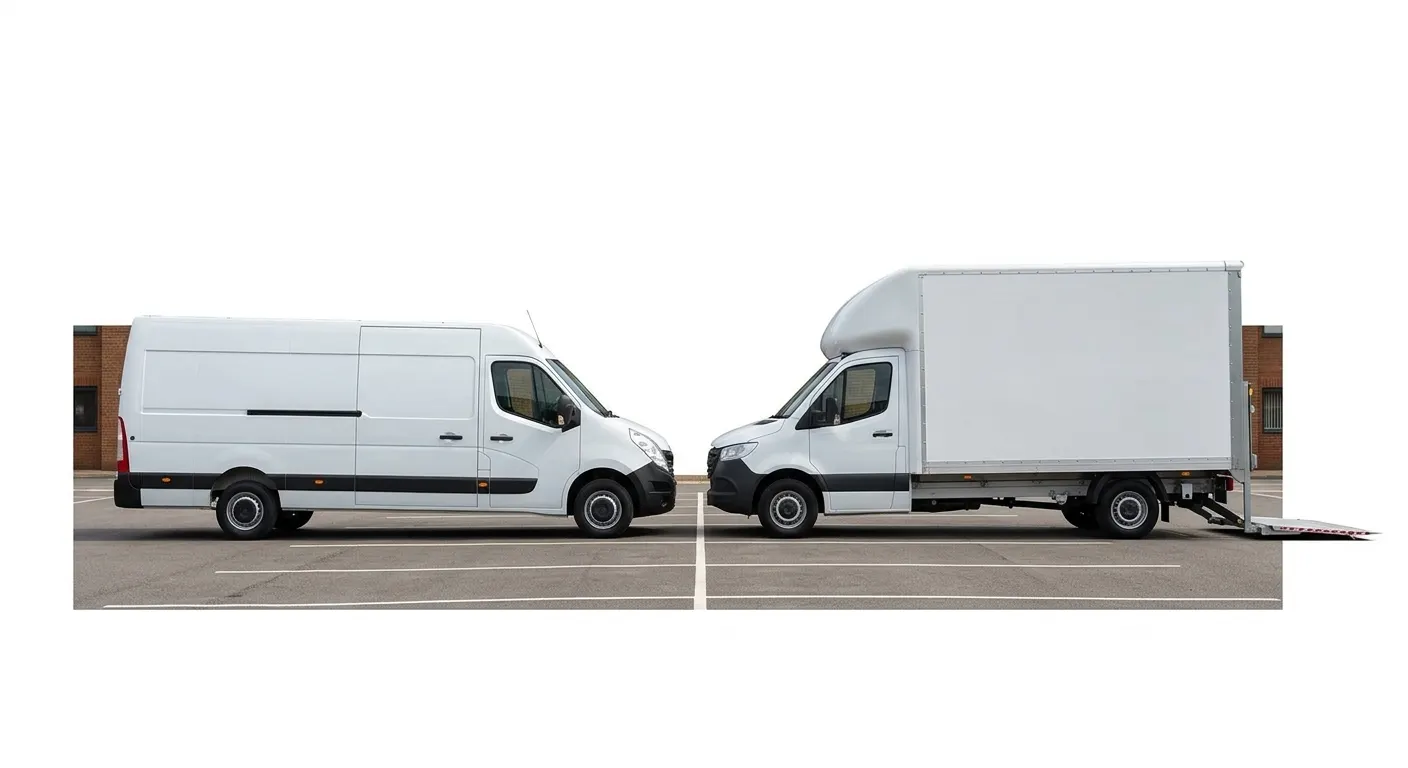
Match the van to the volume, not to the number of rooms, because two people with a minimalist one bedroom flat and two people with a full one bedroom flat need different vehicles. As a rule, a short wheelbase van suits a single room, a long wheelbase van suits a studio to a small one bedroom, and a Luton van with a tail lift suits a full one bedroom and above.
| Van type | Typical load volume | Realistic load | Notes |
| Small or SWB van | About 3 to 6 cubic metres | Single item, student room, a few boxes | Fits most residential streets and low car parks |
| Medium or LWB van | About 8 to 11 cubic metres | Studio, small 1 bedroom | The common London workhorse |
| Luton van with tail lift | About 18 to 20 cubic metres | Full 1 bedroom, small 2 bedroom | Needs kerb space and height clearance |
These are typical industry capacities rather than a statement of any one company’s fleet. EUROBR’s service page refers to a standard van and a larger Luton style van without publishing capacities, so confirm the vehicle when you book if the load is borderline. Getting this wrong is expensive in London: a second run means a second set of road charges, another round trip through traffic, and on an hourly booking, another two hours.
Volume is easier to estimate than people think. Count your boxes, note the large furniture separately, and use standard box sizes as your unit of measurement. The guide to packing box sizes for moving house sets out the standard small, medium, large and wardrobe formats, which makes a volume estimate far more accurate than guessing.
London logistics: parking, access and how to avoid extra hours
Parking is the London variable that decides whether a move runs to time, and it has to be arranged days in advance, not on the morning. Access, lifts and staging come second, and together they account for most of the avoidable cost on a small move.
How parking suspensions and dispensations work
A parking suspension is a temporary reservation of controlled parking bays outside your address, arranged through the local council, so the removals van has a legal and guaranteed place to stop. A dispensation is different: it permits a vehicle to park for a set period in a restricted location, but it does not reserve a space for you.
The distinction matters because the lead times and the outcomes differ. EUROBR’s parking page records the typical London notice periods as ten working days for a suspension, five working days for a dispensation and seven working days for a temporary permit, with yellow warning signs normally going up on the bay about 48 hours beforehand. Late applications attract short notice fees where they are accepted at all.
Without either, the crew parks wherever it can and carries your belongings further, which on an hourly booking you pay for, or the van risks a penalty charge notice. The detailed walkthrough of parking suspension for moving in London covers the borough by borough application routes. Book it the same week you book the van.
Packing and staging tips that cut the hours you pay for
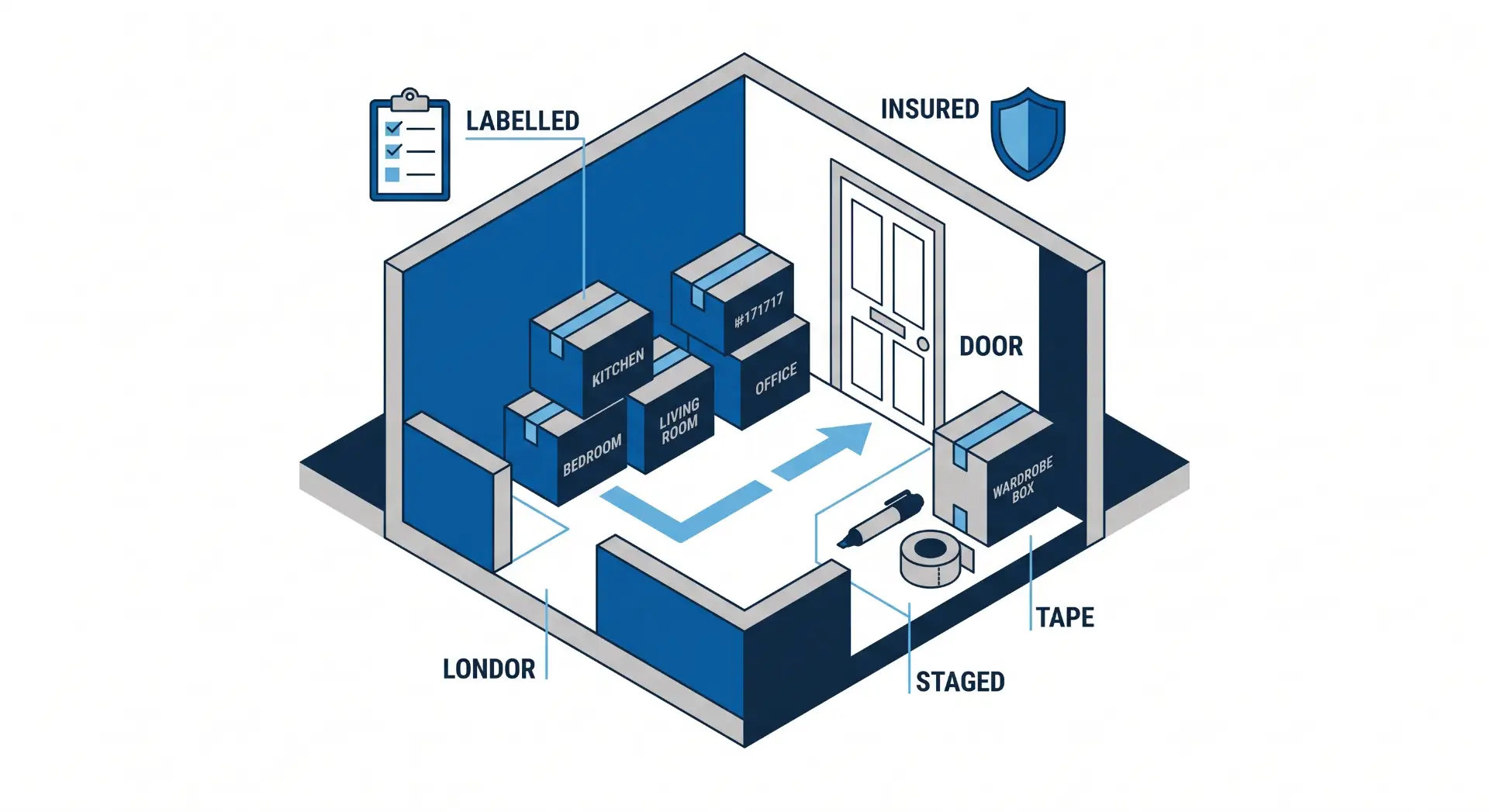
Everything on this list converts directly into fewer chargeable hours, which is why experienced movers treat preparation as a cost control exercise rather than tidiness.
- Seal and label every box by destination room before the van arrives. A crew that has to ask where each box goes loses ten to fifteen minutes per room at the unload.
- Stage boxes in one place near the front door rather than leaving them across the flat.
- Strip beds, empty wardrobes and dismantle flat pack furniture in advance, or book furniture assembly and dismantling so it is part of the quote rather than an hourly surprise.
- Keep a separate bag of essentials with you, so nobody unpacks three boxes looking for a kettle.
- Reserve the lift with the building manager at both ends where there is one, and confirm the booking in writing.
- Photograph the utility readings and the condition of high value items before they are loaded.
If packing is the bottleneck rather than the driving, a dedicated packing service in London is usually cheaper than paying a van crew to wait, and full, part and materials only packing are priced differently.
How to choose a man with a van you can rely on

Check three things before you pay a deposit: the insurance the operator actually holds, their waste carrier registration if anything is being taken away, and whether the quote is in writing with a named company behind it. Reviews come fourth, not first.
Why Goods in Transit, CMR and public liability cover matter
Goods in Transit insurance covers your belongings while they are in the mover’s care during a domestic journey. CMR insurance is the international equivalent, governed by the CMR Convention, and it applies to cross border road freight. Public liability insurance is separate again: it covers damage the crew causes to property or injury to third parties, such as a scratched communal stairwell or a cracked window at the new address.
They are not interchangeable, and a firm that says only “we’re fully insured” has told you nothing. Ask for the cover type, the policy limit in total, the limit per item, and the exclusions. EUROBR publishes Goods in Transit and CMR cover on every move and notes that fragile items, plants and pets are typically excluded from standard cover, which is the industry norm and the reason fragile items usually need to be packed by the crew to be covered. The background to the international side is explained in EUROBR’s guide to CMR regulations.
Two limits are worth asking about specifically, because they decide what a claim is actually worth: the total sum insured for a single load, and the maximum payable for any one item. A policy with a generous headline total and a low per item cap will not cover a single valuable piece of furniture.
How to avoid no-shows, late cancellations and cash-only operators
The warning signs are consistent, and most of them appear before you have paid anything.
- No written quote, or a quote with no company name, address or VAT position on it.
- Cash only, or a large deposit demanded by bank transfer to a personal account.
- No insurance documents offered when asked, or a refusal to state the per item limit.
- No waste carrier registration, when the job includes taking anything away. Carrying waste in England without registering is an offence, and GOV.UK states you can get an unlimited fine if you do not register; registration costs £191.02 and an upper tier renewal £130.25 every three years under the waste carrier registration rules.
- A price quoted over the phone in under a minute with no questions about floors, lifts or parking.
If a service is done badly, you are not without recourse. Citizens Advice explains that under the Consumer Rights Act 2015, services must be provided with reasonable care and skill, and if they are not, you can ask for the service to be done again or for a price reduction, with up to six years to bring a claim in England, Wales and Northern Ireland. Their guidance on how to complain about a service sets out the steps. That protection is worth far more against a registered company than against an informal operator you found in a classified advert.
Trade accreditation is the other filter. The British Association of Removers requires members to pass an external audit each year, to follow a Chartered Trading Standards Institute Code of Practice, and to protect customer prepayments through a Payment Guarantee Scheme, with an independent Consumer Ombudsman available where a dispute cannot be resolved.
When a man with a van is the wrong choice
A man with a van stops being the cheaper option once the load needs more than one run, once the job includes packing, or once the items need specialist handling. At that point a full removals crew usually costs less in total and carries broader responsibility.
The maths is easier to see with published figures. Data from reallymoving, published by the HomeOwners Alliance and updated in January 2026, puts the average UK removals cost at £432 for a one bedroom property, £603 for two bedrooms and £867 for three bedrooms. A two bedroom London flat moved by two people at £78 an hour, over two runs with traffic and a second round of road charges, closes that gap quickly and loses the packing, dismantling and reassembly that a full service includes.
Three situations point clearly away from a van booking:
- Anything above two bedrooms. Volume alone makes a single van uneconomic.
- Offices and IT equipment. Servers, workstations and confidential records need inventory control and data handling discipline, which is why office and IT relocation is run as a distinct service rather than as a van booking.
- Pianos, safes, antiques and artwork. These need specialist equipment and a specific conversation about cover limits before the booking.
Frequently asked questions about hiring a man with a van in London
How much does a man with a van cost per hour in London in 2026?
London hourly rates in 2026 sit at the top of the national ranges. Checkatrade’s August 2026 cost guide gives a UK average of about £64 an hour for one operative with a van, £78 for two and £94 for three, with published ranges of £35 to £93, £50 to £105 and £68 to £120 respectively, and notes that prices are often higher in London and parts of the South East. In practice this means most London bookings land between £50 and £70 an hour for a single operative and between £70 and £105 for two, with a minimum charge of two to three hours applied by most operators. Those figures exclude road charges and parking, which are billed separately and can add £30 to £150 depending on the route and the borough. Fixed pricing is common for defined jobs: EUROBR publishes starting prices of £50 for a single item, £125 for a studio and £165 for a one bedroom move, plus VAT. The detailed breakdown of hourly against fixed pricing is set out in the guide to how much a man with a van costs in London.
How far in advance should a van be booked in London?
Two to three weeks is the working answer for a standard residential move in London, and the constraint is rarely the van itself. Parking is what sets the lead time. A parking suspension typically needs ten working days’ notice, a dispensation five and a temporary permit seven, according to EUROBR’s parking guidance, and late applications attract short notice fees where councils accept them at all. Booking the van three days before the move and the parking on the same day means arriving on moving day with nowhere legal to stop. End of month and end of quarter dates are the busiest in London because tenancy agreements cluster there, so a Friday at the end of a month should be booked four weeks out. Same day and next day bookings do exist, and EUROBR publishes same day, late hours, weekend and bank holiday availability, but availability is subject to crew and van capacity rather than guaranteed. For urgent jobs, the options and limits are covered in the guide to same day man and van in London.
Will a man with a van move a single item of furniture?
Yes, and single item collections are one of the most common bookings in this category. A sofa, a wardrobe, a fridge, a bed frame or a marketplace purchase all fall inside the normal scope, and they are usually priced as a fixed job rather than by the hour because the work is predictable. EUROBR publishes a starting price of £50 plus VAT for a single item move. Three details determine whether the quoted price holds. First, the weight and shape: a two person lift costs more than a one person lift, and anything that will not fit through a doorway or a stairwell without dismantling needs that noted in advance. Second, access at both ends, including floor number, lift availability and where the van can legally stop. Third, whether assembly or dismantling is part of the job, which is a separate service covered by furniture assembly and delivery. Confirm all three in writing and the fixed price will not move on the day.
Do I need a parking permit for the removals van in London?
In most controlled parking zones in London, yes, and it is the single most common cause of moving day delay. There are three mechanisms and they are not interchangeable. A parking suspension reserves specific bays outside your address for the exclusive use of the removals vehicle, and typically needs ten working days’ notice. A dispensation allows a vehicle to park for a set period at a restricted location but does not reserve a space, and typically needs five working days. A temporary permit sits between the two and typically needs seven working days. Charges vary widely by borough, from around £30 to around £130 a day, with Islington, Lambeth, Haringey and Hackney at the expensive end and Wandsworth, Ealing, Merton and Kingston cheaper, according to EUROBR’s parking page. Yellow warning signs normally appear on the bay about 48 hours before the suspension takes effect. Applications are made through the individual borough, and the full process is explained in the guide to parking suspension for moving in London.
Is a man with a van insured for my belongings?
A reputable operator carries Goods in Transit insurance, which covers your belongings while they are in the mover’s care on a domestic journey, and CMR insurance for international road freight. These are not the same as public liability insurance, which covers damage the crew causes to property or injury to a third party. Ask for all three by name rather than accepting “fully insured” as an answer, and ask specifically for the total sum insured and the maximum payable for any single item, because a low per item cap can leave a valuable piece effectively uncovered. Standard policies commonly exclude fragile items unless the crew packed them, along with plants and pets. EUROBR publishes Goods in Transit and CMR cover on every move and states those exclusions openly. Items packed by the customer are frequently excluded from cover, which is a strong argument for booking packing as part of the job. The international side of the cover is explained in the guide to CMR regulations.
Is it customary to tip a van driver in the UK?
Tipping a removals crew in the UK is optional and not expected, unlike in some other countries where it is built into the service culture. Where customers do tip, a common informal practice is £10 to £20 per crew member for a job that went well, or offering refreshments during the day, which is widely appreciated on a long move in summer. Nothing in a quote assumes a tip, and no reputable operator will raise it. What carries more weight for a small business is a public review, because local reputation drives the majority of bookings in this market, and an accurate review naming the crew is worth more to them than cash. If the service fell short, the constructive route is to raise it with the company first: under the Consumer Rights Act 2015 a service must be provided with reasonable care and skill, and the remedies are a repeat performance or a price reduction. The standards that separate accredited firms from informal operators are described in the guide to the mistakes people make when moving house.
Can a man with a van take away my old furniture and rubbish?
Only if the operator is a registered waste carrier, and this is a legal point rather than a preference. Anyone transporting waste in England as part of a business must register with the Environment Agency, and GOV.UK states that you can get an unlimited fine if you do not register. Registration costs £191.02, with an upper tier renewal at £130.25 every three years. The duty of care sits with you as the waste producer as well as with the carrier, so if an unregistered operator takes your old sofa and fly tips it, you can be held responsible. Always ask for the registration number and check it on the Environment Agency’s public register before anything is loaded. EUROBR is a licensed waste carrier and lists home clearance and waste removal among its additional services, with items taken to a certified recycling centre. The costs, legal duties and disposal rules are set out in detail in the guide to house clearance in London.
Booking your London move: what to do next
The three decisions that shape the final bill are made before the van is booked, not on the day. Work out your volume in cubic metres or box counts, confirm where the vehicle can legally stop at both addresses and apply for parking with enough notice, and get the insurance position in writing with the per item limit stated.
Then ask for a fixed price rather than an hourly rate wherever the job can be described accurately, and give the operator enough detail to quote one: room contents, floor numbers, lift availability and both postcodes. A quote built on those facts does not move on the day. The full sequence, from six weeks out to the final utility reading, is laid out in EUROBR’s moving checklist.
Moving in London this week? EUROBR offers same day and next day availability, with Goods in Transit and CMR cover on every move and published starting prices. Get a free, no obligation quote from EUROBR’s insured team, message on WhatsApp at +44 7878 921856 or request a price online.