

House clearance in London is the emptying of a property of furniture, appliances and general contents, followed by the legal disposal of whatever cannot be sold, donated or recycled.
Market guides put a typical three bedroom London clearance at around £750 plus VAT in 2026, with van load pricing running from about £175 for a quarter load to £595 for a full load. The decision that matters most is not price. Under the household waste duty of care you must check the company is on the Environment Agency register of waste carriers before you hand anything over, because if your waste is later fly-tipped you can face a fixed penalty of between £150 and £600, or a fine of up to £5,000 on conviction.
House clearance in London usually arrives at a bad moment. A tenancy is ending on a fixed date, an estate is being wound up after a death, or a landlord has a void property and a letting deadline. The instinct is to find whoever can come soonest for the lowest figure, and that is precisely the decision that creates a second problem four weeks later, when the council traces a sofa dumped on a verge back to an envelope in the pile. This guide covers what a clearance actually includes, what it costs in London as of 2026, the legal duties that sit with you rather than with the contractor, the rules that now govern sofas and armchairs, how bereavement and probate clearances differ, and the checks that separate a licensed operator from a van with a phone number.
What a house clearance in London actually covers
A house clearance is a full or partial emptying of a property, including furniture, white goods, soft furnishings, general household items and rubbish, ending with the property swept and the keys ready to hand back. It differs from a removal, where the contents travel with you, and from a rubbish collection, where only waste is taken.
In practice most London clearances fall into one of four situations: an end of tenancy where the outgoing tenant leaves items behind, a landlord clearing a void between lets, an estate being emptied after a death, or a homeowner downsizing and disposing of decades of accumulated contents. Each has a different emotional temperature and a different timetable, but the operational sequence is the same: sort, remove, dispose lawfully, clean down. Where the contents are moving with you rather than being disposed of, that is a removal job instead, covered by the EUROBR house and flat removals service.
Why hiring a licensed and insured clearance company matters
The licence is not a nicety, it is the thing that transfers legal risk away from you. Anyone who carries waste that somebody else produced must be registered with the Environment Agency as an upper tier waste carrier.
Registration costs the operator £191.02 to register as a waste carrier in England, with a £130.25 renewal every three years, and operating without it carries an unlimited fine. Those figures matter to you as a customer for one reason: they are small. A firm that has not paid £191.02 to register is telling you something about how it intends to dispose of your contents. You can check any company yourself, free, on the Environment Agency public register of waste carriers, brokers and dealers, searching by business name, registration number or postcode, and filtering by tier. Ask for the registration number in writing before the van arrives, and check it against the register rather than against a logo on a website.
The hidden risk of fly-tipping and how it can cost you
If your household waste is fly-tipped, the liability can follow you rather than the person who dumped it. This is the part most people discover too late.
The rule is the household waste duty of care. GOV.UK is direct about it: your household waste must be disposed of correctly, and if you give it to someone else you must make sure they are legally allowed to take it. Fail that check and, under section 34ZA of the Environmental Protection Act 1990, a council or the Environment Agency can issue a fixed penalty of between £150 and £600, with a maximum fine of £5,000 on conviction for failing to take reasonable measures. The government also confirmed in 2026 that the maximum fixed penalty for fly-tipping rises to £5,000, a 400% increase on the previous £1,000, with the top littering fine rising to £750. The defence is documentary: the carrier’s registration number, and a waste transfer note or receipt showing where the load went.
How much does a house clearance cost in London?
A typical three bedroom London house clearance costs around £750 plus VAT in 2026, against a UK average of roughly £450, according to trade cost guides. London sits above the national figure because of labour rates, disposal charges and access.
Two pricing models exist and it is worth knowing which one you are being quoted. Volume pricing charges by van load and suits a property with a lot of bulk. Time and labour pricing charges by the hour per person and suits a property with a lot of sorting. The tables below set out both, with figures published in 2026.
| Property size | UK range 2026 | Typical crew and duration |
| 1 bed flat or bungalow | £100 to £150 | 2 people, 3 to 6 hours |
| 2 bed flat or house | £175 to £275 | 2 to 3 people, 6 to 8 hours |
| 2 to 3 bed house | £275 to £425 | 3 people, 8 to 12 hours |
| 3 to 4 bed house | £400 to £600 | 3 people, up to a full day |
| 4 bed and above | £700 to £1,200 | 3 to 4 people, 1 to 2 days |
| London, typical 3 bed | Around £750 plus VAT | Above the national range |
Source: MyJobQuote house clearance cost guide, 2026. Labour rates quoted at £25 to £40 per person per hour.
| Van load | Approximate weight | Indicative price 2026 |
| Extra small, quarter load | Up to 250kg | From £175 |
| Small, half load | Up to 500kg | From around £325 |
| Medium, three quarter load | Up to 750kg | Upwards of £400 |
| Large, full load | Up to 1,000kg | From £595 |
Source: Checkatrade house clearance cost guide, updated June 2026. The same guide lists separate item charges including £120 for a large fridge freezer, £75 for a small fridge or freezer, £25 per mattress, £20 per television or monitor and £10 per small electrical item.
What drives the quote: volume, access and disposal fees
Three things set the final figure, and only one of them is the amount of stuff. Access and disposal often account for more of the variance than volume does.
- Volume, measured in van loads or cubic metres rather than in rooms
- Access, meaning the floor, the stairs, whether there is a lift, and the carry distance from the kerb
- Heavy or awkward items, since fridges, freezers, mattresses and pianos carry their own disposal charges
- Regulated waste, above all upholstered seating, which must be handled separately
- Parking, permits and vehicle charges, which are paid to the council and Transport for London
- Sorting time, which rises sharply where items must be separated for donation, sale or return to family
Ask for the quote itemised across those lines. A single number tells you nothing about whether the disposal has been costed properly, and an underpriced disposal line is the usual precursor to a load going somewhere it should not.
Why a very cheap quote usually means illegal dumping
A clearance quote well below the market rate is generally not efficiency, it is a disposal cost that has been removed rather than reduced. Licensed disposal is the largest fixed cost in this trade and it cannot be negotiated away.
The arithmetic is straightforward. A full van load carries genuine gate fees at a licensed transfer station, plus the carrier registration, plus separate handling for regulated items. Strip those out and the job becomes very cheap indeed. Defra recorded 1.26 million fly-tipping incidents in England in 2024/25, up 9%, of which 62%, some 777,000 incidents, involved household waste, itself up 13% on the previous year. The most common size recorded was a small van load, at 31% of all incidents, roughly the equivalent of a car boot to a small van. Those small van loads are the visible end of underpriced clearance work. Local authorities carried out 572,000 enforcement actions in the same year and issued 69,000 fixed penalty notices.
What items do house clearance teams take, and what they cannot
Most household contents can be taken, but several categories are regulated and a licensed operator will treat them differently rather than simply loading them. Knowing which is which prevents a dispute on the day.
Furniture, white goods, mattresses and general household waste
Standard clearance covers the bulk of a property: wardrobes, beds, tables, chairs, chests of drawers, bookcases, carpets, curtains, kitchenware, clothing, boxed contents and general rubbish, along with white goods such as fridges, freezers, washing machines and cookers.
White goods and electricals are a distinct stream. Fridges and freezers contain refrigerant gases and must go to a facility equipped to handle them, which is why they carry a separate charge almost everywhere. Electrical items fall under waste electrical and electronic equipment rules and must be treated accordingly rather than crushed with general waste. EUROBR’s published disposal capability sits here: the furniture assembly and delivery service states that EUROBR is a licensed waste carrier for furniture and white goods, and that everything taken away goes to a certified recycling centre.
Sofas and armchairs: the POPs rule that changes everything
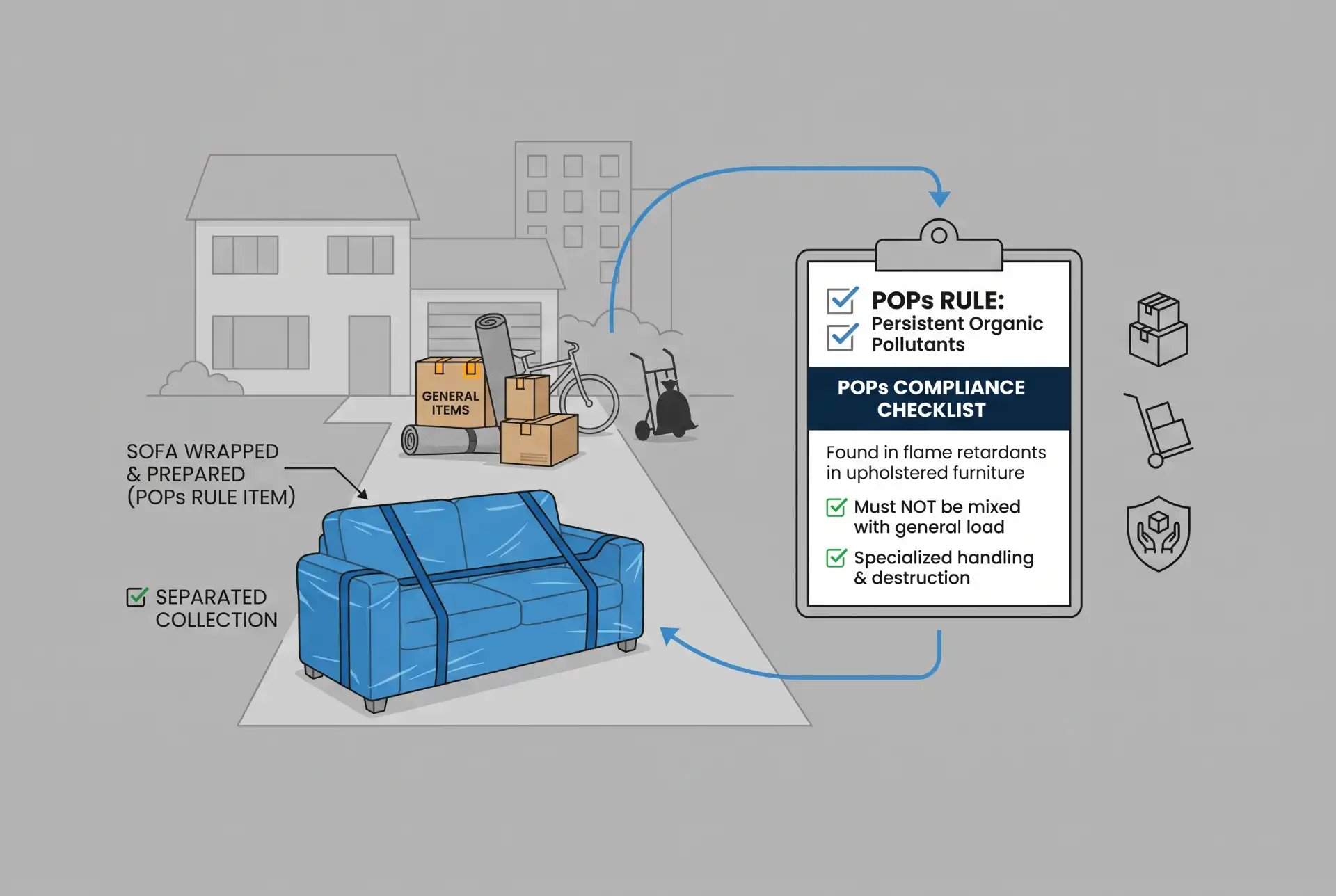
Upholstered seating is now the single most tightly regulated item in a domestic clearance, and any operator who treats a sofa as ordinary bulky waste is not following the law.
Waste upholstered domestic seating is presumed to contain persistent organic pollutants, flame retardant chemicals that do not break down in the environment. Government guidance on managing waste upholstered domestic seating containing POPs covers sofas, armchairs, recliners, dining chairs, garden furniture, office chairs made to domestic fire standards, futons and bean bags, and excludes wooden chairs without cushioning, deckchairs, mattresses and curtains. Three duties follow. The waste must not be mixed with other waste. Landfill operators must not accept it. It must be incinerated. Councils have restructured collections around this: Croydon charges £40.40 for one to three bulky items and £65.30 for four to six in 2026, and collects POPs items on a separate visit on the same day.
Recycling, reuse and charity donation
A good clearance diverts as much as it can before anything is treated as waste, which is both better practice and cheaper. The ceiling on that is set by regulation rather than by goodwill.
WRAP research published in 2015 estimated that around 30% of bulky waste collected from householders could be reused, with furniture averaging 7.5% reusable in its current condition and a further 15% potentially repairable. Donation is worth pursuing for exactly that reason. But upholstered seating is the exception: government guidance on reusing upholstered domestic seating containing POPs sets out seven conditions that must all be met, including that the item is reused for its designed purpose, needs no more than minor repair, and carries appropriate fire safety labels. Where any condition fails, the item is waste and must be incinerated. Allowing reuse outside those conditions is a breach of the law.
Sensitive clearances: bereavement, probate and difficult properties
Some clearances need a different pace rather than a different van. The operational work is the same; the sequencing, the communication and the discretion are not.
Bereavement and probate house clearances
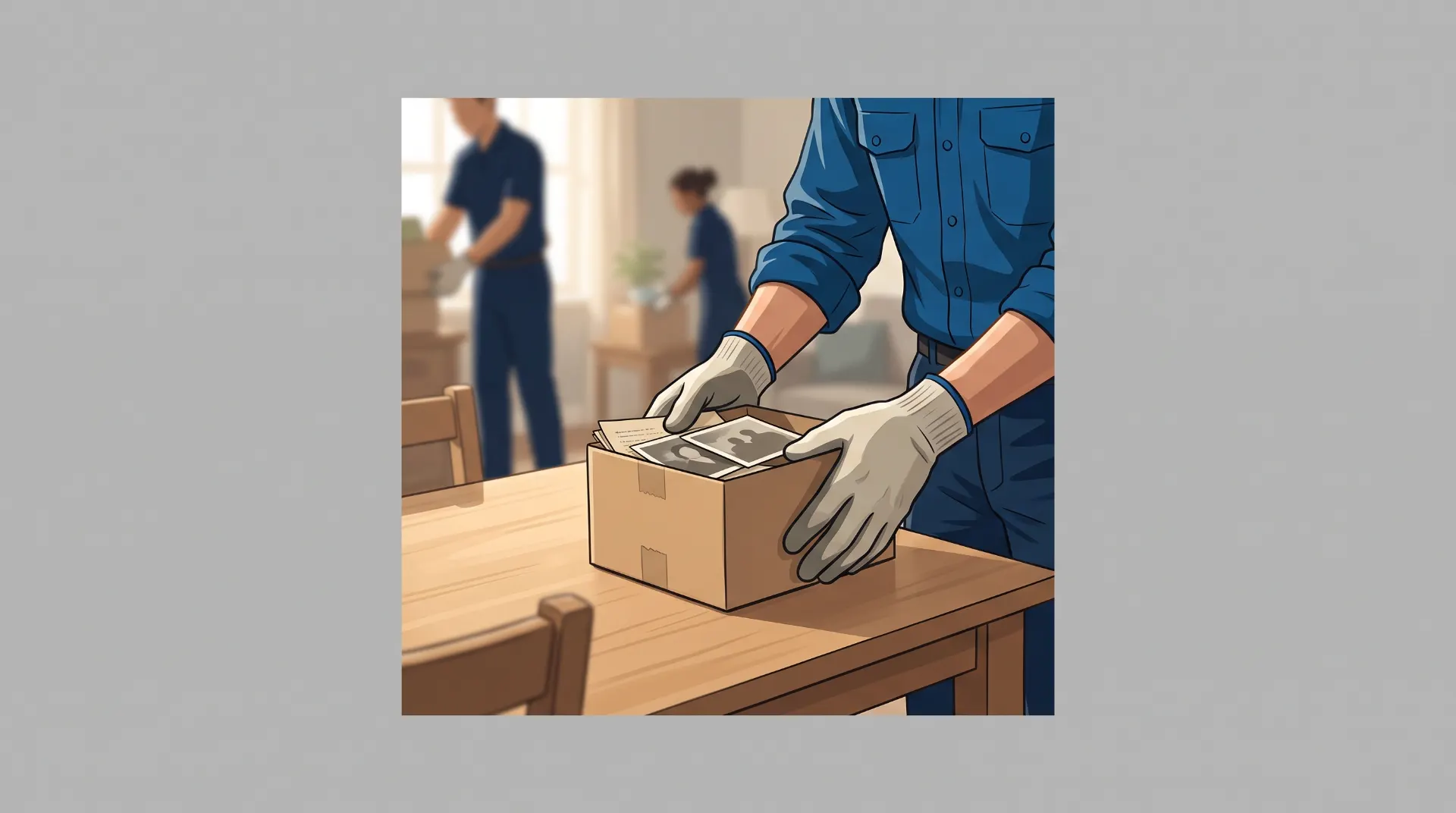
A bereavement clearance is not a normal job with a sad backstory, it is a legally constrained one. Probate is the legal right to deal with someone’s property, money and possessions, and until it is granted the estate is not yours to disperse.
GOV.UK guidance on applying for probate is explicit that you should not make financial plans or put property on the market until probate is granted. In practice that means a clearance is often planned before probate and executed after it, and that anything of potential value is inventoried and photographed rather than removed. Handle the sequence in this order: secure the property, locate documents and anything of obvious value, agree with the executor and family what is being kept, photograph and list the remainder, and only then book the clearance date. A crew that will work room by room, pause when a family member wants to check a drawer, and set aside paperwork rather than bag it, is worth more than one that clears in half the time.
End of tenancy clearouts and heavily filled properties
An end of tenancy clearance runs against a fixed date and a deposit, which changes the priorities. The goal is not just an empty property but an inspection ready one.
The order that works is clear, clean, then check against the inventory, because cleaning before the last item leaves simply gets done twice. Deposit deductions in the private rented sector are dominated by cleaning and damage, so the final sweep is not cosmetic. Heavily filled properties, where contents have accumulated over years, need a different plan again: more crew, more days, a sorting area, and an agreed rule for what gets checked before it is bagged. These jobs are also the ones where manual handling risk is highest, and the Health and Safety Executive records handling, lifting or carrying as 17% of the 59,219 non-fatal employee injuries reported under RIDDOR in 2024/25. The timing side of a tenancy exit is covered in the EUROBR guide to end of tenancy removals in London.
How a London house clearance works, step by step
A clearance runs in three stages, and the first one determines whether the other two go to plan. Expect a written quote before anyone commits to a date.
Step 1: the estimate, by site visit or photographs
The estimate establishes volume, access and which regulated items are present. A site visit is the most accurate method; photographs and a room by room list are the fastest.
Send wide shots of every room, close shots of anything bulky or electrical, a photograph of the staircase and front door, and a picture of the street showing where a van could stop. Say clearly how many upholstered items there are, since those are priced and handled separately, and flag anything you want kept, donated or returned to a family member. Confirm the access details in the same message: floor number, lift or no lift, and whether a parking bay can be suspended.
Step 2: clearance day, and protecting the property
On the day the crew works room by room, protecting the route rather than racing it. Floors, banisters and door frames should be covered before the first item moves.
Expect the team to separate as it goes: general contents to the van, upholstered seating kept apart, white goods and electricals handled as their own stream, and anything set aside for donation or return kept clearly labelled. Ask for the waste transfer documentation at the end, showing the carrier registration and the destination of the load. That paperwork is what discharges your duty of care, and it costs nothing to request.
Step 3: sweeping up and handing back the keys
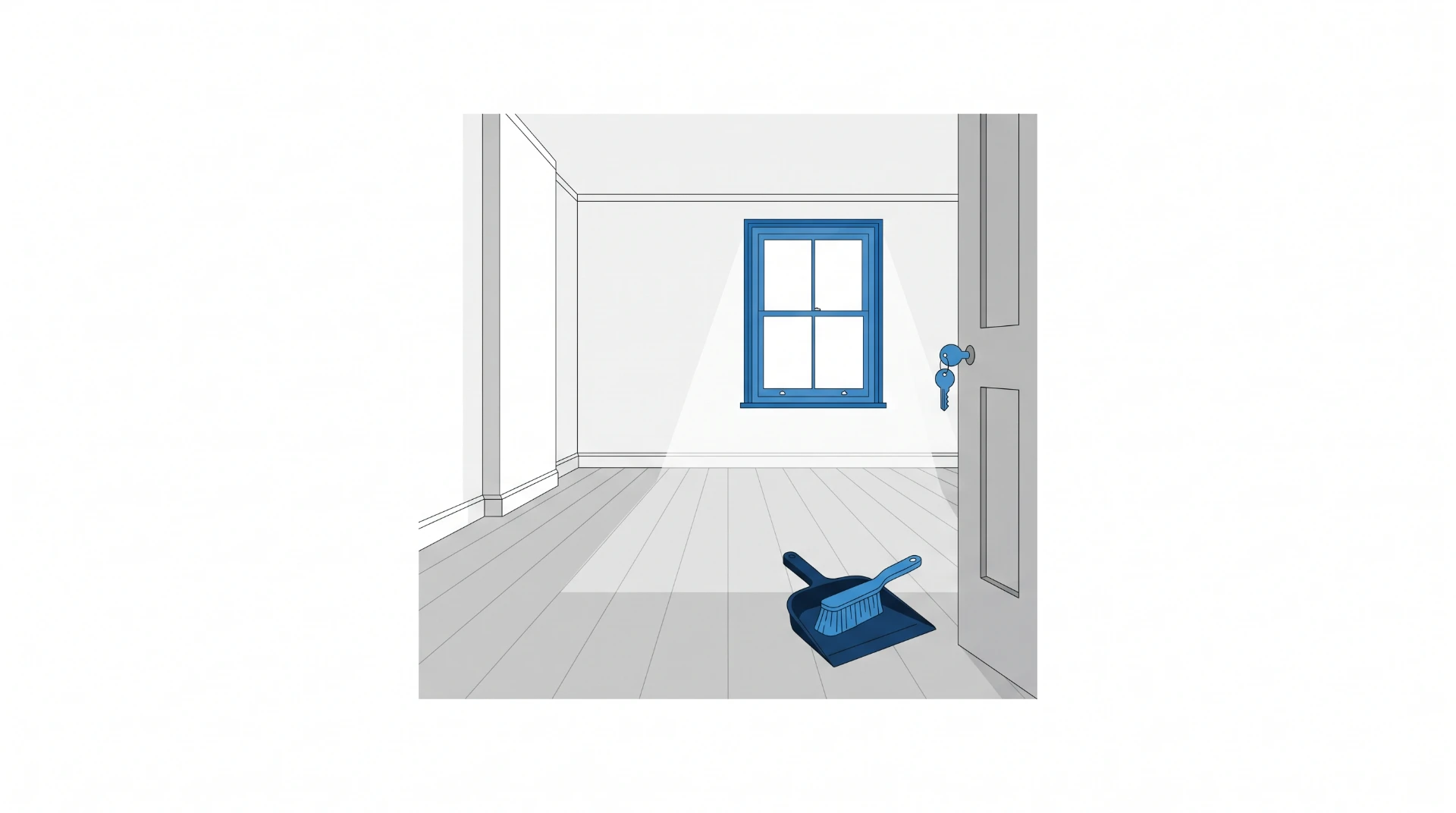
The last stage is a brush clean and a walkthrough. A clearance is finished when the property is empty, swept and photographed, not when the van is full.
Walk each room with the crew leader, check cupboards, lofts, sheds and under stairs, and photograph the empty rooms with a timestamp. If the clearance is for an end of tenancy, compare against the check in inventory before you release the keys. If it is for a probate sale, the same photographs support the estate record. A wider preparation sequence for either situation is set out in the EUROBR moving checklist.
London access, parking and vehicle charges
Vehicle and parking charges apply to a clearance exactly as they do to a removal, and they are paid to third parties rather than to the contractor. Budget for them separately.
As of 2026 the Ultra Low Emission Zone, the daily charge for vehicles that do not meet the emissions standard, is £12.50 a day across every London borough, 24 hours a day, every day except 25 December. In the central zone the Congestion Charge adds £18 a day paid in advance or on the day, rising to £21 if paid by midnight on the third day after travel. Parking is charged by the borough on top: EUROBR’s parking suspension page lists borough by borough application links and puts fees in a range of roughly £30 to £130 per day, with a suspension typically needing 10 working days’ notice and a dispensation 5. A suspension matters for a clearance because the crew carries in one direction all day, and every extra metre from the kerb multiplies the labour. The process itself is explained in the EUROBR parking suspension guide.
How to check a house clearance company in London is legitimate
Five checks take fifteen minutes and remove almost all of the risk. Do them before you agree a price, not after.
| Check | What to ask for | Why it matters |
| Waste carrier registration | Upper tier registration number, verified on the Environment Agency register | Without it, the household waste duty of care exposure stays with you |
| Waste transfer documentation | Confirmation you will receive a transfer note or receipt showing the destination | This is the evidence that discharges your duty of care if waste is later traced |
| POPs handling | How upholstered seating will be separated and where it will go | Landfill cannot accept it and it must be incinerated, so a vague answer is a warning |
| Insurance | Goods in Transit cover and public liability limit for damage to the property | Clearance crews work in occupied buildings and communal stairwells |
| Written itemised quote | Labour, disposal, regulated items, parking and vehicle charges shown separately | A single lump sum hides whether disposal has been costed at all |
If a service is not carried out with reasonable care and skill, Citizens Advice sets out the remedies available under the Consumer Rights Act 2015, including asking for the work to be done again or for a price reduction.
Frequently asked questions
How much does a house clearance cost in London?
Trade cost guides published for 2026 put a typical three bedroom London clearance at around £750 plus VAT, against a UK average of roughly £450. National ranges run from about £100 to £150 for a one bedroom flat, £175 to £275 for a two bedroom property, £275 to £425 for a two to three bedroom house and £400 to £600 for a three to four bedroom house, with four bedrooms and above reaching £700 to £1,200 across one to two days. Labour is generally charged at £25 to £40 per person per hour. Van load pricing is the alternative model, running from around £175 for a quarter load up to £595 for a full load of roughly 1,000kg. Separate charges usually apply to fridges, freezers, mattresses, televisions and pianos. London sits above the national figures because of labour rates, disposal costs and access. Parking, ULEZ and Congestion Charge costs are paid to the council and Transport for London rather than to the contractor, and are listed on the EUROBR parking page.
Do house clearance companies take everything?
Most household contents can be taken, but several categories are regulated and are handled as separate streams rather than simply loaded. Standard clearance covers furniture, carpets, curtains, kitchenware, clothing, boxed contents, general rubbish and white goods such as fridges, freezers, washing machines and cookers. Fridges and freezers contain refrigerant gases and usually carry a separate charge because they must go to an appropriately equipped facility. Electrical items fall under waste electrical and electronic equipment rules. Upholstered seating, including sofas, armchairs, recliners, dining chairs, futons and bean bags, is presumed to contain persistent organic pollutants and must be kept apart from other waste and incinerated rather than landfilled. Items generally excluded from a standard clearance include hazardous waste such as paint, solvents, asbestos, gas bottles, clinical waste and, in most cases, vehicle tyres. Ask for an explicit list of exclusions in the written quote. EUROBR’s published disposal capability covers furniture and white goods under its waste carrier registration, described on the furniture assembly and delivery page.
Am I liable if my house clearance waste is fly-tipped?
You can be, and this is the reason the licence check matters more than the price. Under the household waste duty of care, you must make sure that anyone you give your waste to is legally allowed to take it. If the waste is later dumped and traced back to you, a local authority or the Environment Agency can issue a fixed penalty of between £150 and £600 under section 34ZA of the Environmental Protection Act 1990, and a householder who fails to take reasonable measures can face a maximum fine of £5,000 on conviction. Government confirmed in 2026 that the maximum fixed penalty for fly-tipping itself rises to £5,000, a 400% increase on the previous £1,000. Defra recorded 1.26 million fly-tipping incidents in England in 2024/25, 62% of them involving household waste. Your protection is documentary: verify the carrier’s upper tier registration on the Environment Agency public register before the job, and keep the waste transfer note or receipt showing where the load went. Related pitfalls are covered in the EUROBR guide to mistakes people make when moving house.
What happens to a sofa or armchair during a house clearance?
Upholstered seating is treated as a separate regulated waste stream from the moment it leaves the room. Waste upholstered domestic seating is presumed to contain persistent organic pollutants, flame retardant chemicals that persist in the environment, and government guidance sets three duties on anyone handling it. It must not be mixed with other waste, landfill operators must not accept it, and it must be incinerated. The category covers sofas, armchairs, recliner chairs, dining chairs, garden furniture, office chairs made to domestic fire standards, futons and bean bags. Wooden chairs without cushioning, deckchairs, mattresses and curtains fall outside it. Donation remains possible but only where seven conditions are all met, including that the item is reused for its designed purpose, needs no more than minor repair, and carries appropriate fire safety labels. Where any condition fails, the item is waste. Many councils have restructured collections around this rule, with Croydon collecting POPs items on a separate visit on the same day as other bulky waste. Disposal practice is described on the furniture assembly and delivery page.
How long does a house clearance take?
Duration is set by volume, access and how much sorting is required, rather than by floor area alone. Trade guides indicate a one bedroom flat generally takes three to six hours with a two person team, a two bedroom property six to eight hours with two to three people, a three bedroom house eight to twelve hours with three people, and a property of four bedrooms or more one to two days with three to four people. Access changes those figures more than most people expect. A third floor flat without a lift, or a property where the van cannot park within reasonable carrying distance, can add several hours to an otherwise straightforward job, because every item is carried in one direction all day. Sorting adds time too: a probate clearance where drawers are checked and paperwork set aside will always run longer than a landlord void. Booking a parking bay suspension in advance is the single most effective way to protect the schedule, and notice periods are listed on the EUROBR parking page.
What is the difference between a house clearance and a removal?
The distinction is where the contents end up. A removal transports your belongings from one address to another, with the value in careful packing, transit protection and reassembly at the far end. A house clearance empties a property of contents that are not travelling with you, and the value sits in lawful disposal, recycling and diversion to reuse. The practical consequences differ. A removal firm needs Goods in Transit cover and packing capability. A clearance firm needs waste carrier registration, disposal routes and documentation, because it is handling waste rather than goods. The two jobs often run consecutively: a household moves out with a removal crew, and a separate clearance deals with what remains. Some moves combine them, with unwanted furniture and white goods taken away on the same visit under a waste carrier registration. Where the contents are going with you, that is a removal, described on the house and flat removals page; pricing logic for local jobs is set out in the guide to man and van costs in London.
Can a house be cleared before probate is granted?
Planning can start immediately, but dispersing the estate should wait. Probate is the legal right to deal with someone’s property, money and possessions, and GOV.UK guidance states that you should not make financial plans or put property on the market until probate is granted. In practice this means the clearance is usually prepared before the grant and carried out after it. Preparation is substantial work in its own right: securing the property, locating the will, financial paperwork and anything of obvious value, agreeing with the executor and any beneficiaries what is being retained, and photographing and listing the contents room by room so there is a record of what was present. Items of potential value should be valued rather than assumed worthless, since an inventory protects the executor. Some items can be dealt with earlier where they are clearly worthless waste, but anything that could form part of the estate should not be removed until the position is clear. Once the grant is in place, the clearance itself runs like any other, with the same duty of care and documentation. Preparation steps are set out in the EUROBR moving checklist.
Ready to plan your London property clearance
Start with the licence check and the itemised quote, in that order. Verify the upper tier waste carrier registration on the Environment Agency register, ask in writing how upholstered seating will be handled, and get labour, disposal, regulated items and parking shown as separate lines. Those three steps remove the two failures that cost people money in this category: an underpriced disposal that ends up fly-tipped in your name, and a lump sum that grows on the day.
EUROBR has worked across Greater London and the M25 since 2013, carries Goods in Transit and CMR insurance on every job, holds a 5.0 Google rating and is a licensed waste carrier registered with the Environment Agency. The published disposal capability covers removal and recycling of old furniture and white goods, taken to a certified recycling centre rather than a layby. Full property clearance is not currently published as a standalone EUROBR service, so if you need an entire property emptied, say so at the enquiry stage and the team will confirm exactly what can be handled directly and what would be arranged alongside the move.
Get a free, no obligation quote from EUROBR’s insured team. Send photographs of each room on WhatsApp at +44 7878 921856, or request a price online.