
A flat pack furniture assembly service in London is a booked crew that unpacks, builds and positions boxed furniture in your home or office, then takes the packaging away.
As a 2026 market benchmark, MyJobQuote puts UK assembly labour at around £20 an hour per person, with a two-door wardrobe at £20 to £40, a sliding-door wardrobe at £60 to £80 and an average job at about £70. Most single items take one to three hours. The two things that decide whether a booking goes well are access, which includes parking and lifts, and a clear answer in writing on what happens if something is damaged.
What a furniture assembly service in London covers
Furniture assembly in London is a labour service that turns flatpack cartons into finished furniture in the room where it will stand. A crew arrives at the address, unpacks each carton, checks the fittings against the manufacturer’s instructions, builds the item, positions it, and removes the packaging.
The service usually extends beyond building. EUROBR’s furniture assembly and delivery service covers three connected jobs: collection and delivery from any store or seller in Greater London, assembly of flatpack and boxed furniture on site, and dismantling for a move, a disposal or storage. Old furniture and white goods can be removed and taken to a certified recycling centre by a licensed waste carrier.
Combining those jobs is where the money is. A wardrobe collected, delivered to the bedroom and built in one visit costs less than a delivery slot plus a separate assembler booked for another day.
Why hire a professional flat pack furniture assembler in London?
The case for hiring an assembler is that flatpack is a timed task with a damage risk, and both are worse in a London flat than in a house with a garage. You are buying back a weekend and transferring the risk of a scratched floor or a misaligned door.
London geography sharpens this. Office for National Statistics Census 2021 data shows 54.0% of London households, about 1.8 million homes, live in a flat or maisonette, against 21.7% across England and Wales. A boxed sliding-door wardrobe cannot be built in a hallway and carried into a bedroom, so it has to be carried in as flat cartons and assembled in place, in a room that is often too small to lay the panels out.
Saving your weekend: the real cost of DIY assembly
A single item takes one to three hours for someone who does it every day, and considerably longer for someone reading the diagram for the first time. That gap is the service you are buying.
The 2026 MyJobQuote flat pack assembly cost guide gives useful timings alongside its prices: a bedside cabinet in 15 to 30 minutes, a two-door wardrobe in one to two hours, a sliding-door wardrobe in three to four hours, and a TV unit in one to three hours. A first-time builder should assume double, plus a trip out for a tool that was not in the box.
A bedroom fit-out of a bed, two bedside cabinets, a chest of drawers and a wardrobe is a full weekend for one person and about half a day for a two-person crew. That is the comparison that matters, and it is why most people book after the first attempt rather than before it.
Avoiding damage to your new furniture and your walls
Most flatpack damage happens in three predictable places, and none of them is the build itself. Knowing them tells you where a professional actually earns the fee.
- Cam locks and dowels overtightened. Chipboard strips easily. Once a cam lock has pulled through, the panel is scrap and the retailer will not replace it, because the damage is not a manufacturing fault.
- Building in the wrong place. A wardrobe built in a hallway does not go through a bedroom door. A crew works out the sequence before opening a carton, which is a two-minute check that saves an hour of dismantling.
- Floors and door frames. Panels dragged across engineered wood or laminate leave marks that come out of a tenancy deposit. Professional crews lay protection first.
- Wall fixings. Tall wardrobes and chests of drawers ship with anti-tip restraints that must be fixed to the wall. Skipping them is the most common safety failure in a self-built bedroom, especially in a home with small children.
Brands assembled: from IKEA to any major UK retailer
Assembly is not brand specific, but familiarity with a manufacturer’s fitting system genuinely speeds the job up. EUROBR’s service page names IKEA, Argos and John Lewis explicitly and covers collection from any store or private seller in Greater London, including marketplace purchases.
IKEA assembly: Pax wardrobes, Malm beds and modular systems
IKEA is the most requested assembly in London because its modular ranges are sold as multiple cartons that only become one piece of furniture on site. A Pax wardrobe is the clearest example: frames, doors, interior fittings and any sliding door mechanism arrive as separate boxes with separate instruction sets.
Modular systems have a specific failure mode. Interior fittings such as drawers and rails have to be planned before the frame is closed up, and a sliding door track has to be set level or the doors bind for the life of the wardrobe. That is why a Pax takes three to four hours and a Malm bed takes under an hour.
Book collection and assembly together where you can. EUROBR collects from the store and builds in the room, which removes the gap between a delivery slot and an assembler’s availability.
Argos, Wayfair, John Lewis and other UK retailers
The rest of the UK flatpack market builds on similar principles with different fittings. Argos and Wayfair items tend to be lighter chipboard with more cam locks, John Lewis and Next items tend to be heavier with more dowel and glue, and marketplace furniture is unpredictable because it may arrive without instructions.
Two practical points apply to all of them. First, check the cartons for damage before the assembler starts, because a claim against a retailer is far easier before a panel has been built in. Second, keep the fittings bag sealed until the crew arrives, since a missing pack of screws stops the job entirely.
For second-hand and marketplace purchases, collection matters as much as assembly. EUROBR collects from private sellers across Greater London, which is often the awkward half of the job when the item is on a third floor with no lift.
How a London furniture assembly service works, step by step
A booking runs in three stages: quote, visit, and handover of the packaging. Each has one decision in it.
Step 1: getting a quick quote, fixed price or hourly
Assembly is quoted either per item at a fixed price or by the hour, and which one favours you depends on how predictable the job is. Fixed pricing suits a known catalogue item; hourly suits a mixed load, an unlabelled second-hand piece, or a job where dismantling is involved.
Send the retailer’s product link or a photograph of the carton label when you ask for a price. That single detail is what allows a firm to quote a fixed figure rather than an estimate, because the model number tells an experienced assembler the build time.
EUROBR does not publish an assembly tariff. Its service page states that the price depends on the items, the services needed and the access at the address, and that combining assembly with collection and delivery is usually cheaper. Stairs, multiple stops, mileage, parking, tolls and congestion charges can be added, which is normal for the trade and is worth confirming in the quote rather than discovering on the invoice.
Step 2: tools, fixings and what the crew brings
An assembly crew arrives with its own hand tools and power tools, which is the trade standard and the main reason a job that takes you a weekend takes them an afternoon. Confirm two specifics when booking, because they vary between firms.
- Wall fixing and drilling. Anti-tip restraints, wall-mounted TV brackets and floating shelves need drilling into masonry or plasterboard. Ask whether drilling into walls is included, and check your tenancy agreement before agreeing to it.
- Replacement fittings. Crews carry common screws and dowels, but no assembler carries proprietary cam locks for every model. A missing manufacturer fitting means a return visit, so open the fittings bag and count against the parts list before the booking.
Step 3: assembly, protection and packaging removal
The build itself is the shortest part of a well-run visit. Floor protection goes down first, cartons are opened and checked against the parts list, items are built in the room where they will stand, and the finished piece is levelled and, where relevant, restrained to the wall.
Packaging removal is the part that people forget to ask about and then need. A Pax wardrobe generates a surprising volume of cardboard and polystyrene, and most London flats have nowhere to put it. EUROBR removes the packaging after assembly, which matters more in a communal block than in a house with a driveway.
How much does furniture assembly cost in London?
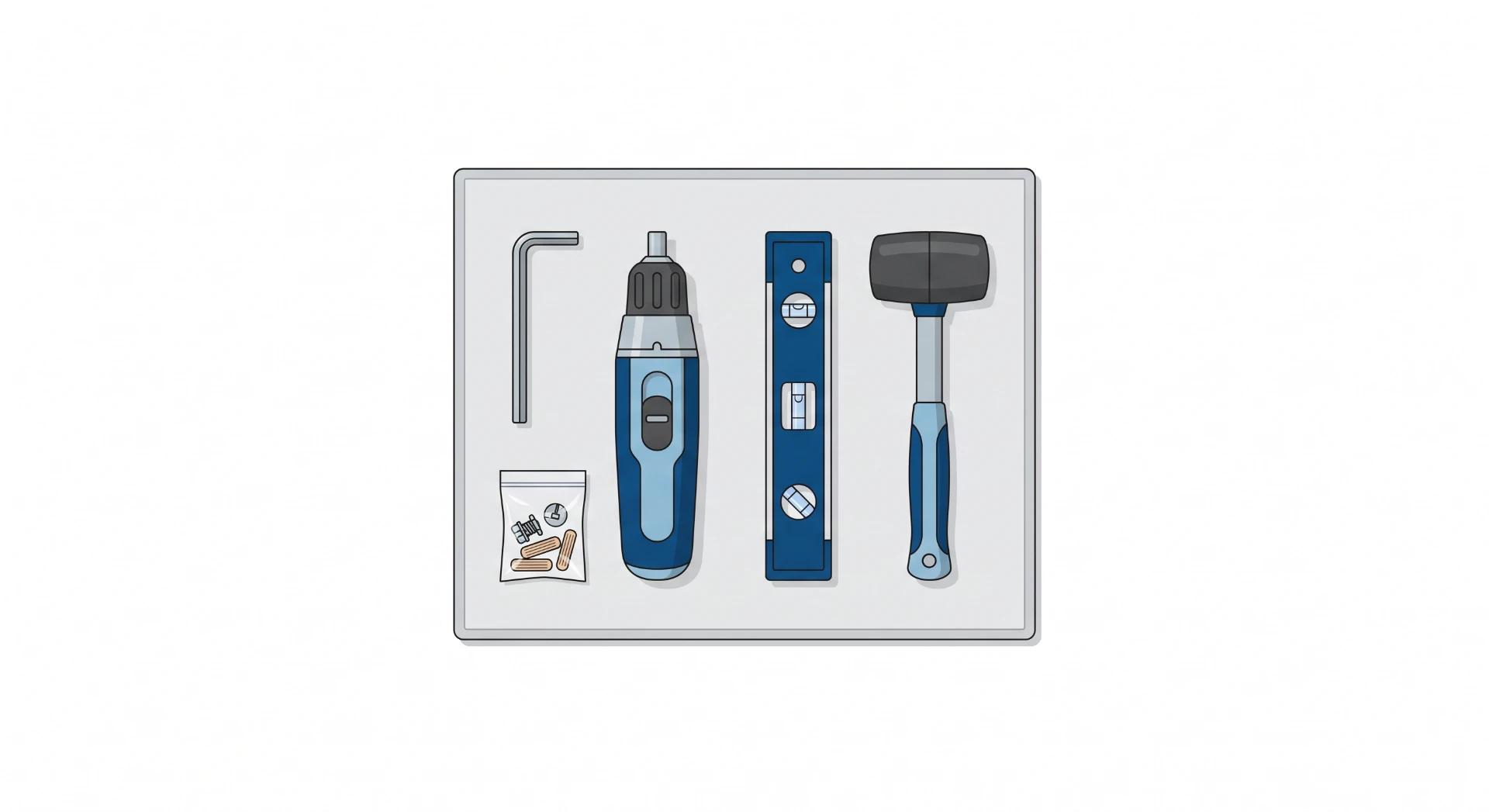
There is no official UK tariff for furniture assembly, so the reference points are commercial price guides rather than public authorities. The figures below come from the MyJobQuote flat pack assembly cost guide, updated for 2026, and should be read as a market benchmark rather than a quotation.
| Item (UK market benchmark, MyJobQuote, 2026) | Typical time | Typical cost |
| Bedside cabinet | 15 to 30 minutes | £10 |
| Two-drawer chest | 30 to 60 minutes | £10 to £20 |
| Three-drawer chest | 45 to 90 minutes | £15 to £30 |
| Small bookcase | 30 to 45 minutes | £10 to £15 |
| Single bed | 30 to 45 minutes | £10 to £15 |
| Double bed | 45 to 60 minutes | £15 to £20 |
| Wardrobe, two doors | 1 to 2 hours | £20 to £40 |
| Wardrobe, sliding doors | 3 to 4 hours | £60 to £80 |
| TV unit | 1 to 3 hours | £20 to £60 |
| Sofa | 1 to 2 hours | £20 to £40 |
The same guide puts general labour at around £20 an hour per person across the UK, with London and the South East above that, an average job at about £70 and a typical minimum booking fee of around £25. London pricing sits at the upper end for a straightforward reason: the crew has to get a van to your door and park it legally.
Two vehicle charges apply as of 2026 and belong in any London quote comparison. The ULEZ charge is £12.50 a day for a non-compliant vehicle, applies across all London boroughs, and runs 24 hours a day every day except 25 December. The Congestion Charge is £18 a day paid in advance or on the day, or £21 if paid by midnight on the third day after travel, and applies in the central zone from 07:00 to 18:00 Monday to Friday and 12:00 to 18:00 at weekends and bank holidays.
For assembly booked as part of a house move rather than as a standalone visit, the arithmetic is different again. Dismantling and reassembly across a whole move costs around £125 on average according to reallymoving data for November 2025 published by the HomeOwners Alliance, which is far less than paying per item.
Dismantling and reassembly when you move
Dismantling is assembly in reverse, and it is a standard part of a full house or flat removal rather than an extra. EUROBR treats furniture dismantling and reassembly as included in a full house and flat removal in London.
The reason to have it done properly is structural. Chipboard furniture is designed to be assembled once. Every dismantle and rebuild loosens the fixing points, so the order in which panels come apart and how the fittings are stored decides whether a wardrobe survives the move. Crews bag and label the fittings against the item, which is the difference between a rebuild that takes 40 minutes and one that takes an afternoon and a trip to a hardware shop.
Some items should not be dismantled at all. Sofa beds, sprung mattresses and glass-fronted units are usually better protected and carried whole, and glued items simply do not come apart without damage. Flag anything glued, antique or unusual at the survey stage. The EUROBR guides to moving in Wandsworth and Bromley cover how access shapes those decisions locally.
What happens to the old furniture
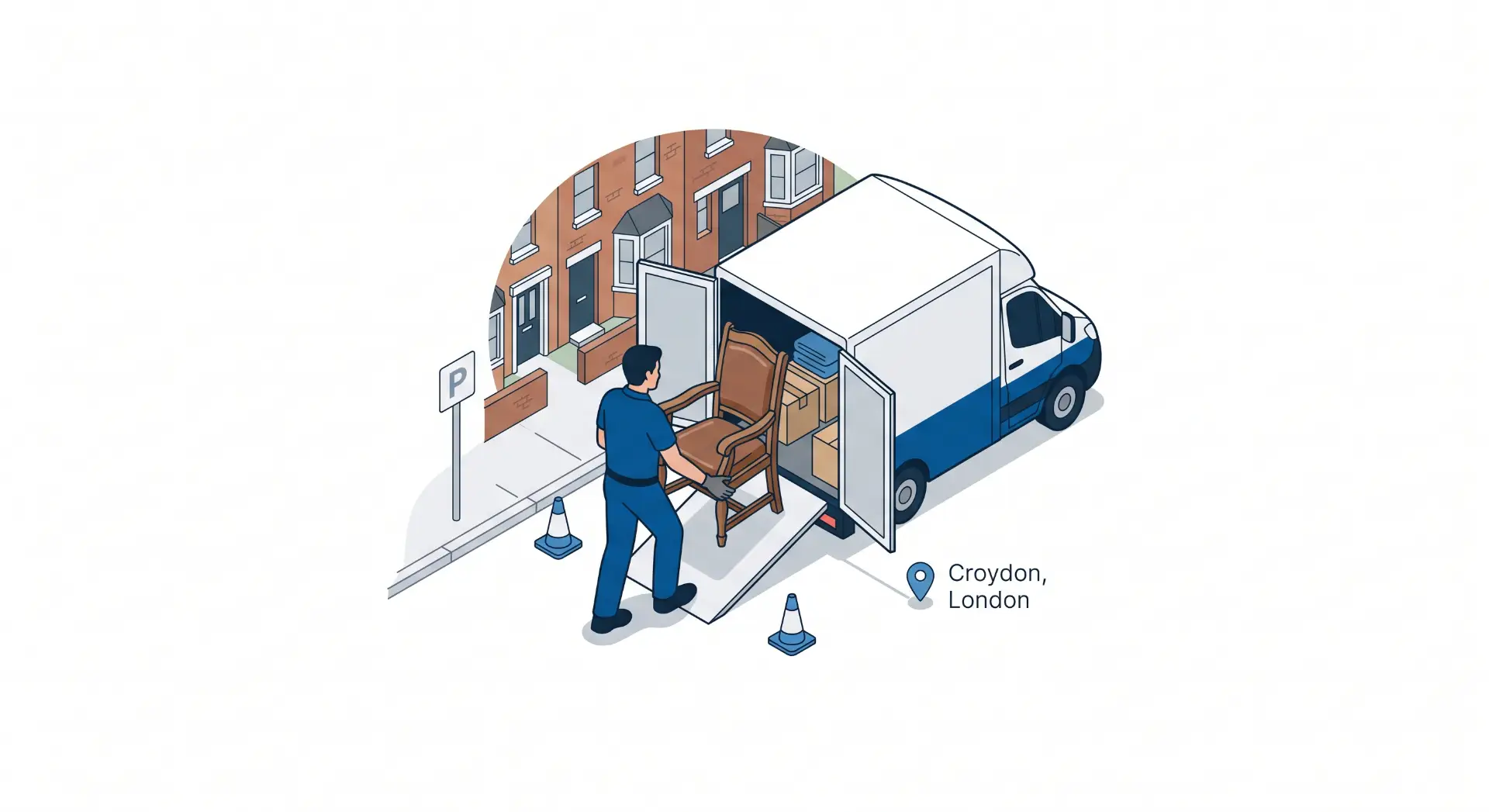
Old furniture and white goods can be removed and recycled as part of an assembly or delivery visit, but only by a business registered as a waste carrier. This is a legal point, not a service preference, and it is the one most people get wrong.
Under the waste duty of care code of practice, a householder must take reasonable steps to check that anyone taking their waste away is authorised to do so. If an unregistered operator fly-tips your sofa, the offence traces back to you. As of 2026, an upper tier waste carrier registration in England costs £191.02, renews every three years at £130.25, and operating without one carries an unlimited fine under the GOV.UK registration rules. Registrations can be checked on the public register of waste carriers.
Penalties for the disposal end have risen sharply. GOV.UK announced in July 2026 that the maximum fixed penalty for fly-tipping in England rises to £5,000, a 400% increase on the previous £1,000 ceiling, as set out in its announcement on waste crime fines.
The council route is the alternative and is often cheaper for a small number of items. Croydon, where EUROBR’s head office sits, charges £40.40 for one to three items and £65.30 for four to six items in 2026, and collects upholstered items separately because sofas and armchairs contain persistent organic pollutants, according to its bulky waste collection page. Council waiting times are the trade-off.
| Disposal route | Typical cost in 2026 | Speed | What to check |
| Removal by a licensed waste carrier | Quoted with the job | Same visit as the assembly or delivery | Registration on the Environment Agency public register |
| Council bulky waste collection | £40.40 for 1 to 3 items and £65.30 for 4 to 6 in Croydon | Days to weeks, depending on the borough | Whether upholstered items need a separate visit |
| Rehoming, sale or donation | None, or a small collection fee | Depends on the buyer or charity | Whether the item is complete and undamaged |
| Household recycling centre yourself | Free in most boroughs | Immediate | Vehicle size rules and whether a permit is needed |
Reuse beats recycling where the item still works. WRAP’s guidance on bulky waste estimates that around 30% of household bulky waste could be reused, with furniture categories making up roughly 22.5% of the total.
Collection and delivery of furniture across London
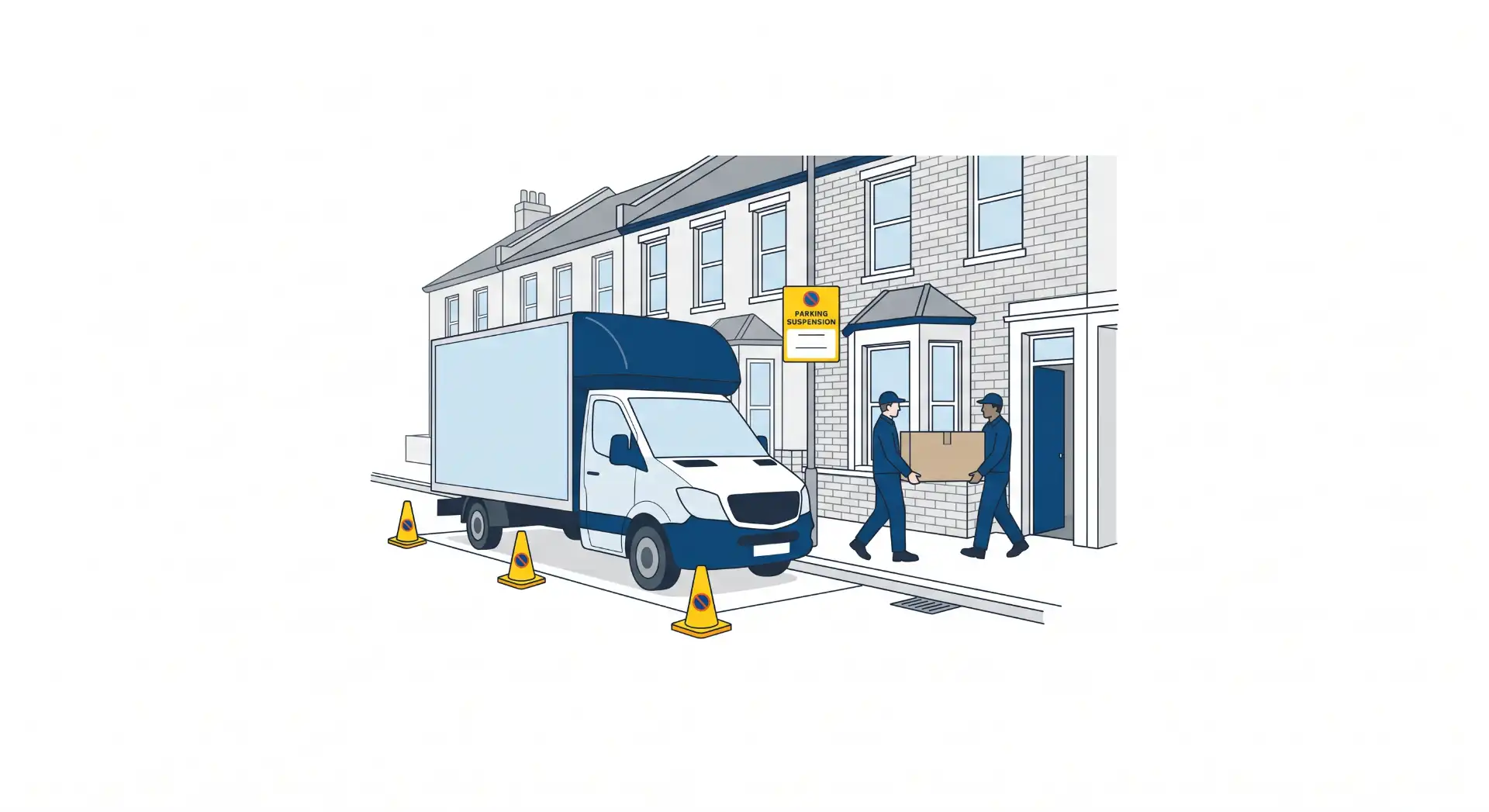
Collection and delivery is the half of the job that decides the price, because it involves a vehicle, a route and somewhere legal to stop. Assembly time barely varies across London; access time varies enormously.
Three access questions come up on nearly every booking:
- Where does the van stop? On a controlled parking street a delivery van has no legal place to wait. A parking bay suspension is a temporary reservation of controlled bays outside an address, arranged through the council, and most boroughs need five to fifteen working days’ notice. EUROBR’s parking page explains what is required, and the guide to parking suspension for moving in London covers borough differences.
- Is there a lift, and does it need booking? Managed blocks often require lift booking with the building manager and may restrict delivery hours.
- Will the carton fit through the door? Measure the narrowest point on the route, including the turn at the top of a stair, and compare it with the carton dimensions on the retailer’s website rather than the assembled dimensions.
For single items and short-notice jobs, a man and van in London is often the right vehicle, and the guide to same day man and van in London explains what can realistically be done at short notice.
What insurance covers, and what it does not
Insurance on a furniture job covers goods in transit, and the exclusions are specific enough that they need reading before the booking rather than after a breakage. This is the objection most readers actually have, so it deserves a direct answer.
EUROBR carries Goods in Transit insurance and CMR cover, the international road haulage convention explained on its CMR regulations page. Its furniture page sets out that professional packaging and an advance invoice are required for cover, and that fragile categories sit outside standard cover: glass, ceramics, screens, crystal, jewellery, artwork, paints, plants and pets.
Two practical consequences follow. If you are having a glass-fronted cabinet or a large television collected, ask specifically how it is covered and whether it needs professional packing first. And keep the retailer invoice, because cover on a new item is assessed against its documented value.
Ask three questions in writing before any assembly booking, from any firm:
- What is the limit of cover for a single item, not just the load?
- Is there separate cover for accidental damage to the property, such as a floor or a wall, during assembly?
- What is the claims window and what evidence is required?
The British Association of Removers audits member firms annually against a Chartered Trading Standards Institute code, and its standards are a reasonable benchmark to hold any quote against. Under the Consumer Rights Act 2015, a service must be carried out with reasonable care and skill, and the remedies where it is not are repeat performance or a price reduction, as Citizens Advice explains.
Assembly for offices and rented homes
Two settings change the job enough to plan for them separately: an office fit-out and a rented flat. Both add a third party with an opinion.
In an office, assembly is scheduled around trading hours and building access rather than around the furniture. Desks, storage and partitions are usually built out of hours or at a weekend so the floor is usable on Monday, and the building manager controls the goods lift and the loading bay. EUROBR’s office and IT relocation service covers desk and partition assembly alongside the move itself.
In a rented flat, the constraint is the tenancy agreement. Drilling into walls for anti-tip restraints or television brackets usually needs the landlord’s consent, and unauthorised holes are a common deposit deduction at the end of a tenancy. Ask before the crew arrives, not while they are holding the drill. The EUROBR guide to end of tenancy removals in London covers what tends to be deducted and why.
Frequently asked questions about furniture assembly in London
How much does furniture assembly cost in London?
There is no official UK tariff for furniture assembly, so quotes are built from item type, quantity and access. Market benchmarks published by MyJobQuote for 2026 put general assembly labour at around £20 an hour per person across the UK, with London and the South East above that figure, an average job at about £70 and a typical minimum booking fee of around £25. Per item, the same guide gives £10 for a bedside cabinet, £15 to £30 for a three-drawer chest, £20 to £40 for a two-door wardrobe, £60 to £80 for a sliding-door wardrobe and £20 to £60 for a TV unit, with most single items taking one to three hours. London pricing carries additional variables that do not apply elsewhere: parking or a bay suspension, stairs where there is no lift, mileage across the capital, and vehicle charges. As of 2026 the ULEZ charge is £12.50 a day across all boroughs and the Congestion Charge is £18 a day in the central zone. Where assembly forms part of a house move rather than a standalone visit, dismantling and reassembly is normally quoted within the removal, as set out on the house and flat removals page.
Do I need to provide any tools for the fitters?
No. An assembly crew arrives with its own hand tools and power tools, which is the trade standard and the main reason a job that would take a household a weekend takes a crew an afternoon. Two details are worth confirming at booking, because they vary between firms rather than being universal. The first is drilling into walls. Anti-tip restraints supplied with tall wardrobes and chests of drawers, wall-mounted television brackets and floating shelves all require fixing into masonry or plasterboard, and not every assembly booking includes that work by default. In a rented property, drilling usually also needs the landlord’s consent, and unauthorised holes are a frequent deposit deduction. The second is replacement fittings. Crews carry common screws and dowels, but no assembler stocks proprietary cam locks for every model on the market, so a missing manufacturer fitting can mean a return visit. Opening the fittings bag and counting the parts against the instruction list before the visit avoids that entirely. Collection, delivery and assembly options are set out on the furniture assembly and delivery page.
Can you dismantle and reassemble furniture for moving?
Yes, and on a full house or flat removal dismantling and reassembly is normally part of the service rather than an extra line. Doing it properly is a structural question rather than a convenience: chipboard furniture is designed to be assembled once, and each dismantle and rebuild loosens the fixing points, so the sequence panels come apart in and how the fittings are stored decides whether an item survives. Crews bag and label fittings against each item, which is the difference between a 40 minute rebuild and an afternoon spent searching for a missing cam lock. Some items are better moved whole: sofa beds, sprung mattresses, glass-fronted units and anything glued rather than bolted rarely come apart without damage. Anything antique, glued or unusually large should be flagged at the survey stage so the right approach and materials are quoted in. As a market benchmark, reallymoving data for November 2025 puts dismantling and reassembly across a whole move at around £125. The house and flat removals page sets out what a full move includes.
How long does it take to assemble flat pack furniture?
Most single items take one to three hours for an experienced assembler, and the spread within that range is wide because it depends on the fitting system rather than the size. Published 2026 timings put a bedside cabinet at 15 to 30 minutes, a single bed at 30 to 45 minutes, a two-door wardrobe at one to two hours, a TV unit at one to three hours and a sliding-door wardrobe at three to four hours. Modular systems take longest because they arrive as several cartons with separate instruction sets, and because interior fittings such as drawers and rails have to be planned before the frame is closed. Someone assembling an item for the first time should assume roughly double the professional time, plus any interruption to buy a tool that was not supplied. Room size affects the total as well: a wardrobe cannot be laid out flat in a small London bedroom, so panels are handled upright, which is slower and needs two people. Access adds to the visit rather than the build, which is why stairs and parking appear on quotes. The moving checklist helps sequence assembly around a move date.
What happens to the packaging and the old furniture?
Packaging removal is normally included in a professional assembly visit, and it matters more than it sounds, because a single modular wardrobe generates a volume of cardboard and polystyrene that will not fit in a communal bin store. Old furniture is a different question with a legal answer. Under the waste duty of care in England, a householder must take reasonable steps to check that whoever removes their waste is registered to carry it, and if an unregistered operator fly-tips the item, liability traces back to the household. Registration can be checked free on the Environment Agency public register, and as of 2026 an upper tier registration costs £191.02 with renewal every three years at £130.25. Penalties have risen: GOV.UK confirmed in July 2026 that the maximum fixed penalty for fly-tipping in England rises to £5,000. Council bulky waste collection is the alternative, with Croydon charging £40.40 for one to three items and £65.30 for four to six in 2026, and collecting upholstered items separately because they contain persistent organic pollutants. Licensed disposal options are described on the furniture assembly and delivery page.
What if the fitters damage my furniture or my flat?
Liability on a furniture job has two separate parts, and they are covered by different things. Damage to the goods while they are being transported falls under goods in transit insurance, which is standard for a licensed removals and delivery firm. Damage to the property itself, such as a scratched floor or a marked wall during assembly, is a different category and is worth asking about specifically rather than assuming, since a single answer about being insured does not distinguish between the two. Standard goods cover also carries exclusions that apply regardless of who handles the item: glass, ceramics, screens, crystal, jewellery, artwork, paints, plants and pets typically sit outside it, and cover on a new item is usually assessed against a documented invoice value, so retailer paperwork should be kept. Separately from insurance, the Consumer Rights Act 2015 requires a service to be performed with reasonable care and skill, and where it is not, the remedies are repeat performance or a price reduction. Cover on cross-border road movements is explained on the CMR regulations page.
Can you collect furniture from IKEA or a marketplace seller?
Yes. Collection from a retailer or a private seller anywhere in Greater London can be booked alongside assembly, and combining the two is usually cheaper than paying for a delivery slot and a separate assembler on different days. Retail collection is the straightforward version: the order is ready, the loading area is designed for it, and the constraint is at the delivery end rather than the pickup. Marketplace and second-hand collection is the harder half, because the item may be on an upper floor with no lift, may need dismantling before it can leave the property, and may arrive without instructions or a full set of fittings. Both cases turn on the same three access questions: where the van can legally stop at each end, whether a lift needs booking with a building manager, and whether the item fits through the narrowest point on the route, measured at the carton dimensions rather than the assembled ones. Charges for stairs, multiple stops, mileage, parking, tolls and congestion are normal in this trade and should be confirmed within the quote. Options are listed on the furniture assembly and delivery page.
Get your flat pack built this week
Flatpack sitting in cartons in a London flat is a room you cannot use. Booking an assembly visit turns a weekend of diagrams into an afternoon where somebody else does the carrying, the drilling and the tidying up, and takes the packaging away at the end.
Send a photograph of the carton label or the retailer’s product link with your enquiry. That is what allows a firm to quote a fixed figure rather than an estimate, and it takes 30 seconds. EUROBR has worked across Greater London and the M25 since 2013, is fully insured with Goods in Transit and CMR cover, and is a licensed waste carrier registered with the Environment Agency, so old furniture can leave legally on the same visit.
Get a free, no-obligation quote from EUROBR’s insured team, message on WhatsApp at +44 7878 921856, or request a price through the contact page.