
Professional packing service in London is a crew that wraps, boxes, labels and inventories the contents of your home before the removal van arrives, using materials the company supplies. It comes in three formats: full packing, part packing and materials only.
As a market benchmark, reallymoving data published by the HomeOwners Alliance in January 2026 puts full packing for a three-bedroom house at roughly £400 to £500, with unpacking adding around £200. The main practical reason to book it is not comfort. It is that goods in transit cover usually treats professionally packed items differently from boxes you filled yourself, and that packing is the task most likely to run over and delay a London moving day.
What a packing service in London actually is
Packing services London households book are a labour and materials service, not a separate removal. A trained crew arrives at your address before the move, wraps and boxes your belongings room by room, labels every carton by room and by contents, and leaves the property ready for loading. The crew brings the cartons, tape, paper, wrapping and covers with them, so nothing depends on you sourcing supplies from a supermarket the night before.
The service exists because packing is the single largest block of unpaid work in a move. A two-bedroom flat in Wandsworth typically holds between 40 and 60 cartons once the kitchen and wardrobes are packed properly. Two experienced packers get through that in a day. One person working evenings after work takes a fortnight and usually stops halfway.
EUROBR runs packing as part of its house and flat removals in London, and also as a standalone booking through its packing services and materials page. Both routes use the same crew and the same materials.
Why hire a professional packing service in London?
The honest case for hiring packers is time and liability, in that order. You are buying back several days of your own labour, and you are moving the responsibility for how a box was filled onto a company that carries insurance.
London adds a third reason that does not apply everywhere. Census 2021 data from the Office for National Statistics shows that 54.0% of London households, about 1.8 million homes, live in a flat or maisonette, against 21.7% across England and Wales. Flats mean stairs, lifts with booking slots, communal doors and narrow landings. Packing badly in a flat is expensive twice over, because a carton that is too heavy to carry down four flights is a carton that gets repacked on the landing while the van waits.
Saving time: from days of packing to a few hours
A full pack of an average London home takes a two-person crew between six and ten hours. That is the realistic comparison, and it is worth doing the arithmetic before deciding.
Packing your own three-bedroom house properly takes most people between 20 and 30 hours spread across two or three weeks, because you can only work in the evenings and you have to buy and collect materials as you go. Booking a crew converts that into a single working day where you are present but not carrying anything.
There is a scheduling benefit as well. Professional packers pack the day before the move, or the same morning for a small flat, which means the house stays liveable until the last possible moment. Self-packers usually start a fortnight out and live among boxes, which is why so many people report the packing phase as worse than moving day itself.
The hidden costs of packing your own home
Packing your own home is rarely free once you count materials, breakages and the cover you lose. Those three costs are invisible when you make the decision and obvious afterwards.
- Materials. A three-bedroom home needs 50 to 70 cartons, plus tape, paper, bubble wrap and mattress covers. Bought individually at retail, that is a real cost, and supermarket boxes are single-wall grocery cartons that fail under book weight.
- Breakages. Glass, ceramics and screens break in transit almost entirely because of how they were wrapped, not how they were driven. A single dinner service or a 55 inch television outweighs the cost of fragile packing.
- Insurance position. Most removals contracts treat owner-packed cartons differently. As the Moving Compared guide to removals insurance puts it, removal companies “may limit cover for things you pack yourself because they can’t check how well you packed them”, and some contracts set lower liability limits for owner-packed items where there is no visible damage to the box.
- Time off work. Two evenings a week for a fortnight is roughly a day and a half of unpaid labour, before moving day itself.
In 12 years packing and moving London homes, the EUROBR crew finds the most common self-packing failure is not a fragile item at all. It is overfilled book and kitchen cartons that split at the base on the stairs, which is exactly what double-wall boxes and correct fill levels are designed to prevent.
How London packing services work, step by step
A packing job runs in four stages: survey, materials delivery, the pack itself, and optional unpacking after the move. Each stage has a decision in it, so it helps to know what you are choosing.
The survey comes first. EUROBR asks for a short survey before quoting packing, because carton counts cannot be estimated accurately from a room count alone. The number of cartons a home needs depends on how much is in the wardrobes, whether the kitchen is fully equipped and how many books, records and framed pictures are in the property.
Materials arrive either on the day or in advance, depending on the format you choose. The pack itself is done room by room, with each carton labelled by room and by contents so that unloading at the far end can be directed rather than guessed.
| Format | What the crew packs | Best suited to | Insurance position |
| Full packing | The entire property, including kitchen, wardrobes and fragile items | Time-critical moves, families with young children, homes with a lot of glass and art | Every carton packed by the carrier |
| Part packing | Selected rooms, usually the kitchen, fragile items and wardrobes | Households with time for simple rooms who want the difficult ones handled | Mixed load, risk sits where you placed it |
| Materials only | Nothing; correct cartons and consumables are supplied | Self-packers who want proper boxes rather than supermarket cartons | All cartons treated as owner-packed |
Full packing: the hands off option
Full packing means the crew packs everything in the property, including the kitchen, wardrobes, lofts where they are safely accessible, and fragile items. You do not pack anything except the personal essentials you want to keep with you.
Choose full packing when the move is time-critical, when you are moving with small children, when you are working through the notice period on a tenancy, or when the property holds a lot of glass, china and framed art. It is also the format that gives the cleanest insurance position, because every carton in the load was filled by the company that is carrying it.
Full packing normally happens the day before the move for a house, or on the morning of the move for a one-bedroom flat. That timing matters, because a full pack and a full load on the same day in a fourth-floor flat with no lift is a long day for everyone.
Part packing and fragile packing for kitchens, art and antiques
Part packing means the crew handles the difficult rooms and you handle the rest. In practice, most London households that choose this format hand over the kitchen, the fragile items and the wardrobes, and pack their own clothes, books, toys and linen.
This is usually the best value option, because the rooms you keep are the ones that are quick and low risk, and the rooms you hand over are the ones where a mistake is expensive. A kitchen alone can take an inexperienced packer a full weekend.
Fragile packing covers glass, ceramics, mirrors, framed pictures, televisions and lamps, each wrapped individually rather than nested. Declare antiques, artwork and musical instruments at the survey stage rather than on the day. EUROBR’s house and flat removals page asks for complex or antique pieces to be flagged at survey specifically so the right materials and handling are quoted in, and so nothing is discovered by the crew at eight in the morning.
Unpacking and empty box collection
Unpacking is a separate, optional service where the crew unwraps items, places them in the rooms you direct, and removes the empty cartons and used packing material from the property. It usually takes a team half a day for a standard three-bedroom home.
Empty box removal is the part people underestimate. Sixty flattened cartons and a bin bag of used bubble wrap will not fit in a communal bin store, and many London councils will not take that volume as ordinary household recycling. EUROBR’s packing service includes collection of the empty boxes and used packaging when unpacking is booked, which removes a genuine disposal problem rather than a theoretical one.
Do packers provide moving boxes and materials?
Yes. A professional packing service supplies all cartons, wrapping and protective materials as part of the job, and a materials-only option exists for households that want the right boxes but intend to pack themselves.
That third option is worth knowing about. Materials only means the company delivers the correct cartons and consumables to your address, you pack at your own pace, and the crew arrives on moving day to load. It costs less than a full pack and still solves the supermarket-box problem.
What is in a standard materials list
The standard list is short, and each item exists for a specific load type. EUROBR’s packing materials page lists the following:
- Standard cartons in small, medium and large
- Heavy-duty double-wall cartons for books, records, tools and crockery
- Wardrobe cartons with a hanging rail, so suits and dresses travel on their hangers
- Bubble wrap and clean packing paper
- Packing tape and dispensers
- Mattress covers and sofa covers
- Specialist cartons for pictures, mirrors and televisions
- Labels and marker pens
The rule that matters most is weight, not size. Small cartons are for heavy, dense items and large cartons are for light, bulky ones. Getting that the wrong way round is the most common reason a box fails on the stairs. The EUROBR guide to packing box sizes for moving house covers the dimensions and what belongs in each size.
Specialist boxes and custom crating
Specialist packaging covers the items a standard carton cannot protect: flat-screen televisions, framed pictures, mirrors and lamp shades. Picture and mirror cartons are telescopic, so they adjust to the frame rather than leaving it loose in a void.
Export-grade packing is a step beyond that. It uses heavier materials and tighter wrapping for goods that will be handled multiple times, stacked, or sit in a container for weeks. EUROBR supplies export-grade packing for storage and for international shipping, which is the relevant standard for a load going on the road route to Portugal or mainland Europe, or by sea container to Brazil.
Custom crating, meaning a purpose-built timber crate around a single item, is not listed on the EUROBR service page. If you have a piece that needs one, ask for it explicitly at survey rather than assuming it is included.
How much does a packing service cost in London?
There is no published national tariff for packing, but there is a reliable market benchmark. Data from reallymoving for November 2025, published by the HomeOwners Alliance removals cost guide in January 2026, puts a full pack for a three-bedroom house at around £400 to £500, with extra charges possible for fragile items.
The same data set gives useful context for the rest of the move. These are UK averages rather than London figures, and London sits above them.
| Service (UK benchmark, reallymoving data, November 2025) | Typical cost |
| Removal, 1 bedroom | £432 |
| Removal, 2 bedrooms | £603 |
| Removal, 3 bedrooms | £867 |
| Removal, 4 bedrooms | £1,196 |
| Removal, 5 bedrooms | £1,590 |
| Full packing service, 3 bedrooms | £400 to £500 |
| Unpacking, 3 bedrooms | around £200 extra |
| Furniture dismantling and reassembly | around £125 |
EUROBR does not publish a packing tariff, because carton counts and access vary so widely between a studio in Croydon and a four-bedroom house in Bromley. The quote is built from the survey. For the removal element, the EUROBR guide on how much a man with a van costs in London explains how hourly and fixed pricing work in 2026.
What changes your quote
Six variables move a packing quote, and all of them are things you can describe accurately over the phone.
- Volume, not room count. Two flats with the same floor area can differ by 30 cartons depending on wardrobes, books and kitchen contents.
- Fragile share. A household with a full dinner service, framed art and three televisions needs more time and more specialist cartons.
- Access at both ends. Fourth floor with no lift, a shared entrance with a fire door, or a narrow communal stair all add crew hours.
- Format. Full pack, part pack or materials only, and whether unpacking is added.
- Timing. Packing the day before is calmer and often cheaper in total than compressing pack and load into one day.
- Vehicle charges. As of 2026, the ULEZ charge is £12.50 a day across all London boroughs, running 24 hours a day every day except 25 December. The Congestion Charge is £18 a day paid in advance or on the day, or £21 if paid by midnight on the third day after travel, and applies in the central zone from 07:00 to 18:00 Monday to Friday and 12:00 to 18:00 at weekends and on bank holidays.
Where packing sits inside the total move budget
Packing is usually the second largest line on a move, after the removal itself, and it is the line most often left out of a first estimate. Budgeting for it early avoids the common trap of comparing one quote that includes packing against another that does not.
Read every quote for what is included rather than the headline number. A quote that covers packing, materials, dismantling, reassembly and a parking suspension is not comparable to a lower quote for two people and a van. The EUROBR article on mistakes people make when moving house covers the comparison problem in detail.
How professional packing changes your insurance position
Professional packing does not lower an insurance premium, but it does change how cover applies to your load, which is the point that actually matters. This is the single most useful thing to understand before choosing a format.
Goods in transit insurance covers belongings while a company is moving them. The limitation most people miss is the treatment of owner-packed cartons. Because the carrier cannot inspect how a box was filled, contracts commonly restrict or exclude damage to contents of boxes packed by the customer, particularly where there is no external damage to the carton itself.
EUROBR states on its packing services page that professionally packed items are covered by its Goods in Transit insurance. The company also carries CMR cover, the international road haulage convention that governs liability on cross-border road moves, explained on the EUROBR CMR regulations page.
What owner-packed means in a removals contract
Owner-packed, sometimes abbreviated to PBO for “packed by owner”, is the contractual category for any carton the customer filled. It is not a penalty. It is a limit that exists because nobody can verify the contents or the wrapping after the lid is taped.
The practical consequence is narrow but real. If an owner-packed carton arrives with no external damage and a broken plate inside, the usual position is that the claim fails, because there is no evidence of mishandling. If the same plate was packed by the crew, that argument does not apply.
Mixed loads are common and perfectly workable. Many London households have the fragile rooms packed professionally and pack their own clothes and linen, which puts the risk exactly where it belongs.
What to ask before you sign
Four questions settle the insurance position on any UK move, and they should be asked before the deposit rather than after the damage.
- What is the limit of cover for the whole load, and what is the limit for any single item?
- How are owner-packed cartons treated, in writing?
- Which categories are excluded as standard? EUROBR’s furniture assembly and delivery page lists glass, ceramics, screens, crystal, jewellery, artwork, paints, plants and pets as items outside standard cover, which is typical for the trade.
- What is the claims window and what evidence is needed?
If a mover will not answer those four in writing, that is the answer. The British Association of Removers sets out the standards a member firm is audited against annually, and is a reasonable benchmark to hold any quote against.
What should you do before the packers arrive?
Very little, and that is the point, but the small amount that is required makes a large difference to how the day runs. Three tasks matter: separate the essentials, declutter, and clear the access.
Declutter first, because packing things you intend to throw away is the most expensive mistake available. Every carton costs materials and crew time, and anything you take to a new home you will unpack again. The EUROBR moving checklist sets out the sequence in the weeks before the move.
The essentials box you keep yourself
Keep one bag or box with you, in your own car or by the front door, and never let it go on the van. Its contents are the things that are painful to lose for even a day.
- Passports, visas, birth certificates and tenancy or completion paperwork
- Keys, including the ones you must hand back
- Phone chargers, laptop and cables
- Prescription medicines and glasses
- Wallet, cards and any cash
- A change of clothes, toiletries, and whatever your children or pets need for 24 hours
- Kettle, mugs, tea and a roll of bin bags
What packers will not take
Some categories are excluded from any UK removal load, for legal or safety reasons, and packers will leave them where they are. Knowing the list in advance prevents an awkward conversation on the day.
- Petrol, paraffin, gas bottles, aerosols in bulk and other flammable goods
- Paints and solvents
- Plants and pets
- Perishable and frozen food
- Cash, jewellery and important documents, which should travel with you
Fridges and freezers must be defrosted and dried the night before, and washing machines need transit bolts fitted or the drum secured. Neither is a packing task, but both stop a load if they are missed.
Access, parking and timing in a London flat
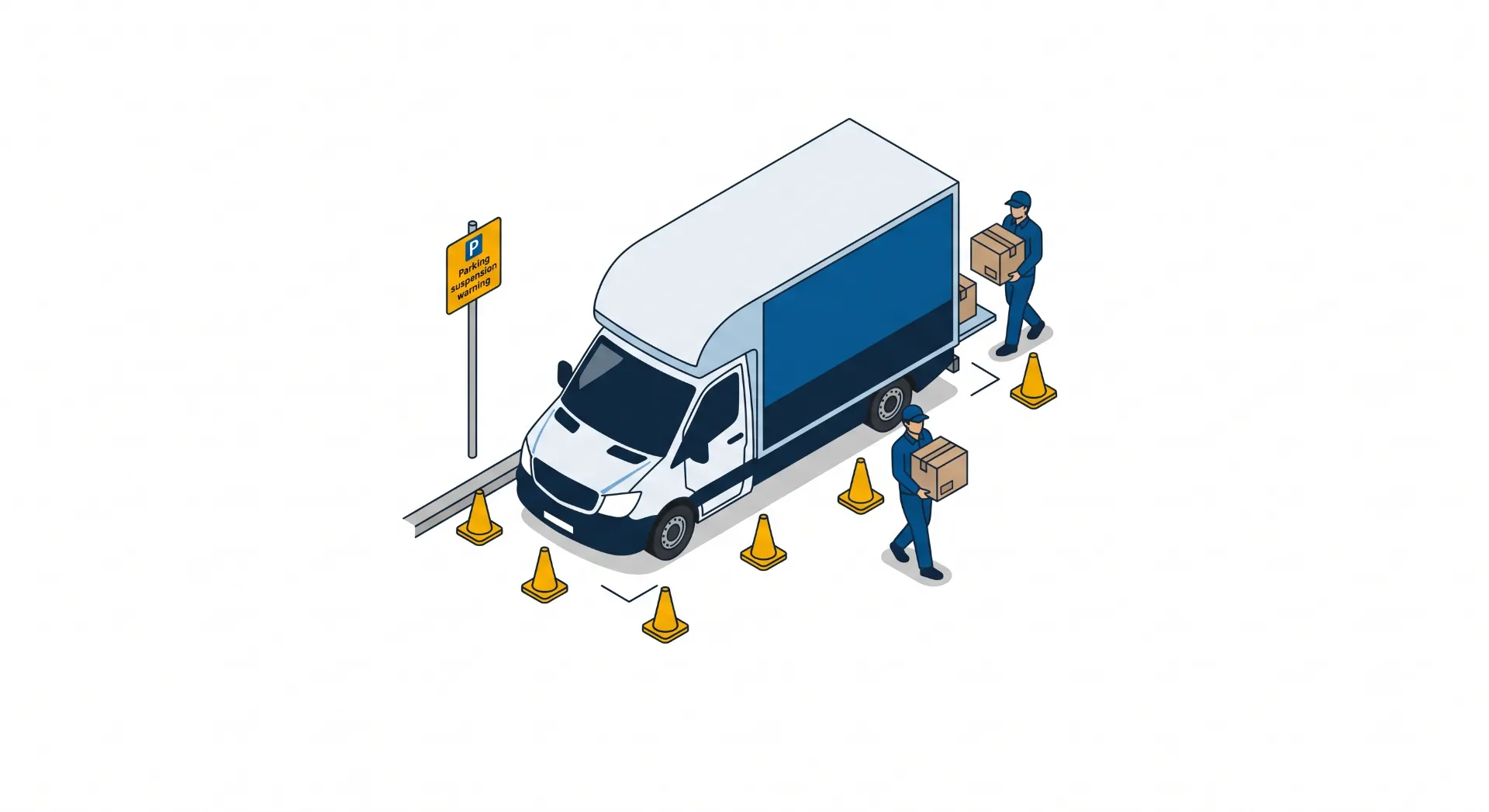
Access is the variable that decides whether a packed home loads in three hours or six, and it is arranged before the day rather than on it. In flats it has three parts: the vehicle, the communal route and the lift.
Parking comes first. A parking bay suspension is a temporary reservation of controlled parking bays outside your address, arranged through the local council, usually with five to fifteen working days’ notice depending on the borough. Without one, a removal lorry on a controlled street has nowhere legal to stop, which means either a long carry or a penalty charge notice. EUROBR arranges suspensions as part of a booked move, and the parking information page explains what is needed, while the guide to parking suspension for moving in London covers the borough-by-borough differences.
Lifts in managed blocks often need booking with the building manager, sometimes with proof of the mover’s insurance, and many buildings restrict moving hours. Ask the freeholder or managing agent at least two weeks out. The EUROBR guides to moving in Wandsworth, Wimbledon and Richmond cover the local rules in those boroughs.
How to check a London packing company is genuine
Three checks separate an insured removals firm from an informal operator, and all three take under ten minutes. Do them before you pay a deposit, not after a problem.
Check the insurance in writing. Ask for the Goods in Transit policy and, for any cross-border move, CMR cover. Ask for the single-item limit as well as the total, because a load limit tells you nothing about a television or a bicycle.
Check the waste carrier registration if any disposal or clearance is part of the job. Registration is held with the Environment Agency and can be searched on the public register of waste carriers. As of 2026, an upper tier registration costs £191.02, renews every three years at £130.25, and operating without one carries an unlimited fine under the GOV.UK waste carrier rules.
Check the paperwork trail. A real quote is itemised, names the address, states the date and lists what is included. EUROBR has operated in London since 2013 and publishes its credentials on its about us page.
Packing for storage, Europe and Brazil
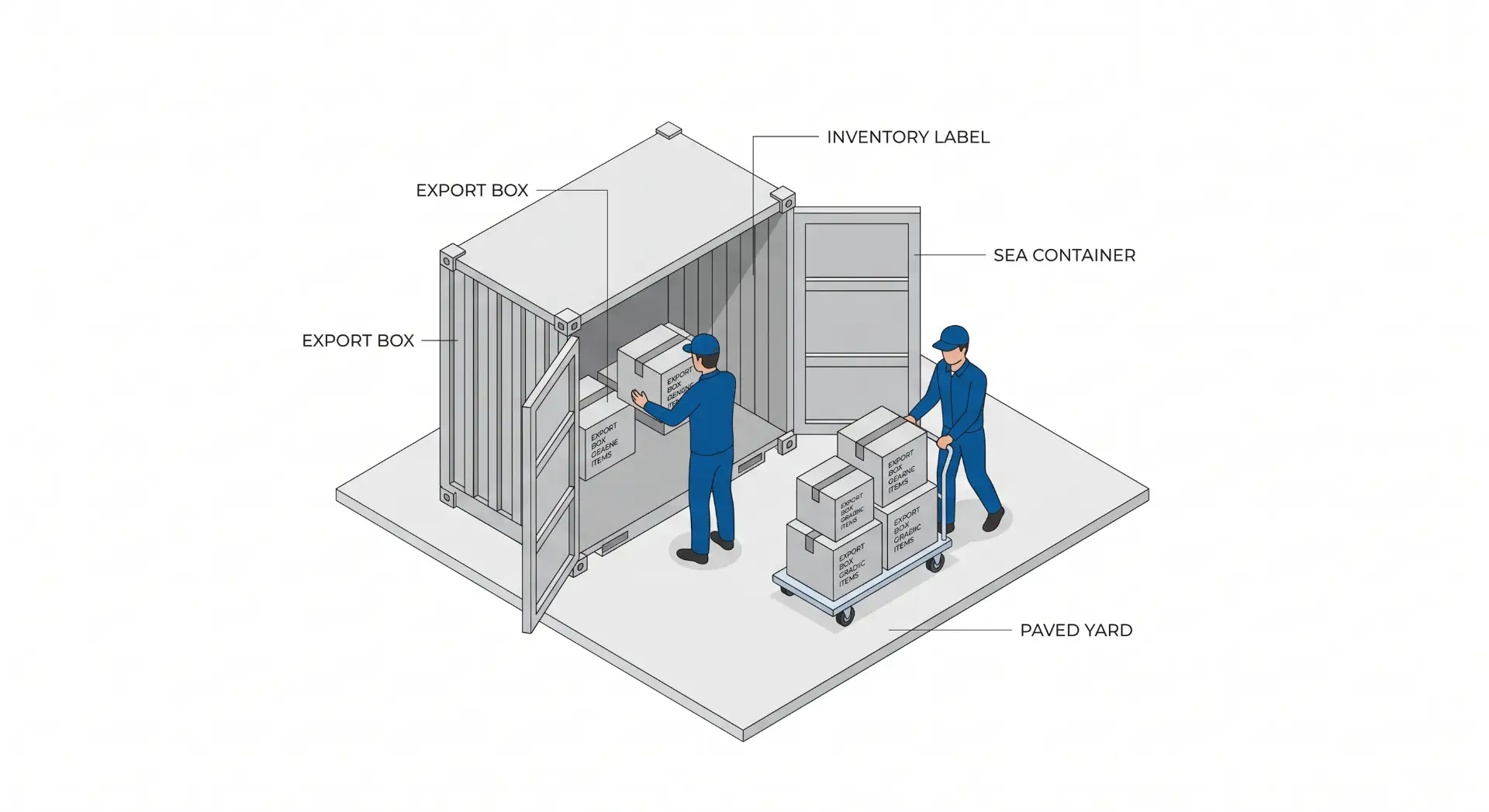
Packing for storage or for an international leg is a different standard from packing for a 40 minute drive across London, and it needs to be specified at the quote stage.
Goods that sit in storage or travel in a container are handled repeatedly, stacked, and exposed to temperature swings. That calls for export-grade materials, tighter wrapping, and an inventory that matches the manifest item for item. EUROBR provides export-grade packing and offers short term storage between moving dates on its house and flat removals service.
For international moves, the inventory does double duty as a customs document. The EUROBR guide to moving from the UK, with packing tips and a customs list explains how the list should be built, and shipments can be followed through the tracking form. Business moves follow the same logic with crate hire and labelling by desk and department, covered on the office and IT relocation page.
Frequently asked questions about packing services in London
How much does a packing service cost in London?
There is no published national tariff for packing, so the reliable reference point is market data rather than a fixed price. Figures from reallymoving for November 2025, published by the HomeOwners Alliance in January 2026, put a full packing service for a three-bedroom house at roughly £400 to £500, with additional charges possible for fragile items, and unpacking at around £200 more for the same property. London quotes sit above UK averages because access, parking and vehicle charges are higher in the capital. The price of a specific job is built from the number of cartons a property actually needs, the proportion of fragile contents, the access at both addresses, and whether the format chosen is full packing, part packing or materials only. Vehicle charges apply on top where relevant: as of 2026 the ULEZ charge is £12.50 a day across all London boroughs, and the Congestion Charge is £18 a day in the central zone. Because carton counts cannot be estimated from a room count alone, most London firms quote packing only after a short survey. The EUROBR packing services and materials page sets out which formats are available.
Do packers bring their own boxes and materials?
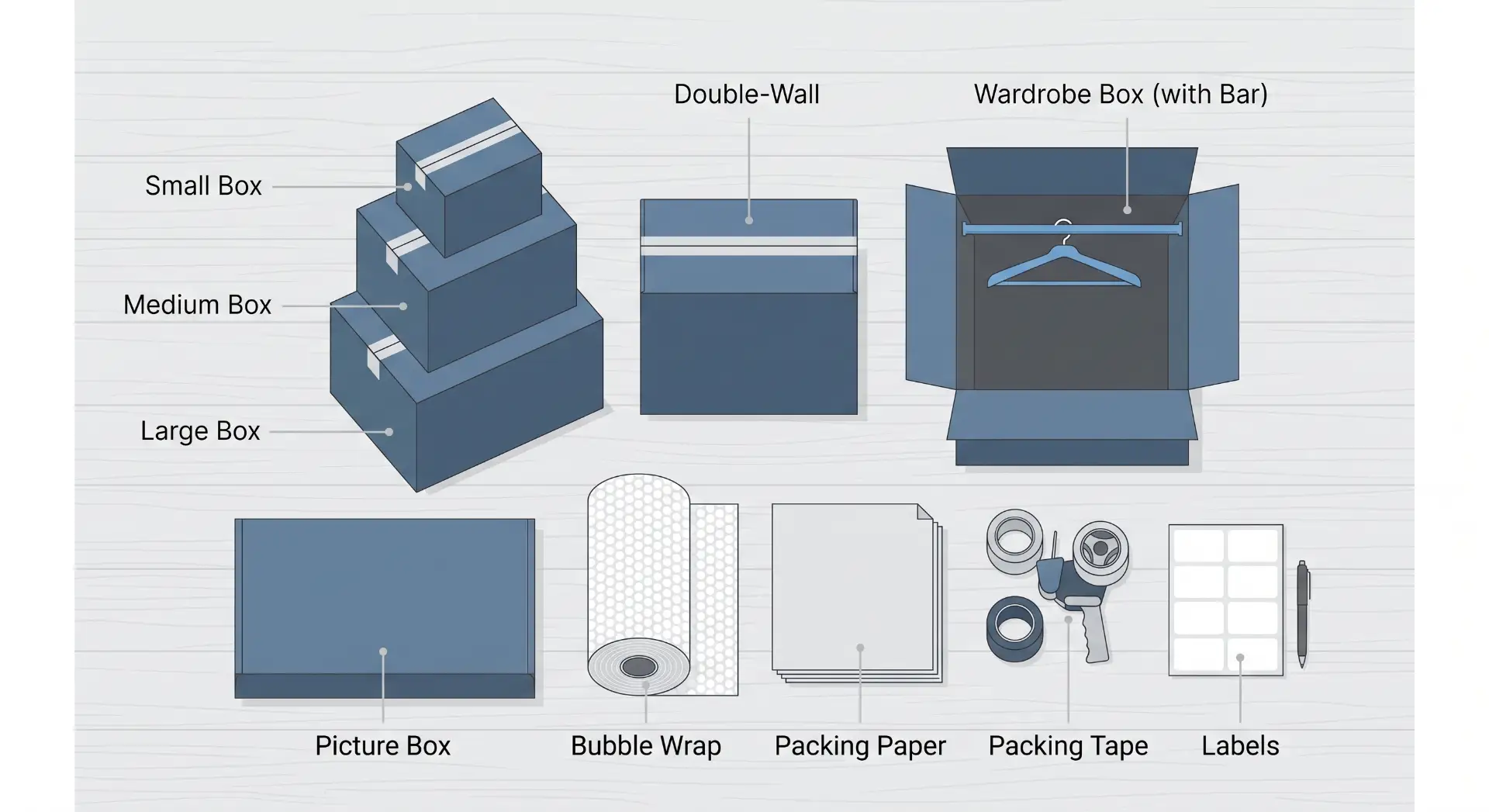
Yes. A professional packing service supplies every carton and consumable the job needs, and the cost of those materials is normally built into the quote rather than billed separately. A standard materials list includes small, medium and large cartons, heavy-duty double-wall cartons for books and crockery, wardrobe cartons with a hanging rail, bubble wrap, clean packing paper, tape and dispensers, mattress and sofa covers, specialist cartons for pictures, mirrors and televisions, and labels. Export-grade materials are used where goods are going into storage or into a container rather than straight into a new home. A separate materials-only arrangement exists for households that want correct cartons but intend to pack themselves, which avoids the common problem of single-wall supermarket boxes failing under book or kitchen weight. The governing rule is weight rather than volume: small cartons take heavy, dense items and large cartons take light, bulky ones. The guide to packing box sizes for moving house sets out the dimensions and what belongs in each.
How long does it take to pack a house in London?
A two-person professional crew packs an average London home in six to ten hours, which is normally a single working day. A one-bedroom flat can be packed in three to four hours, a two-bedroom flat in five to seven, and a four-bedroom house may need two crew days or a larger team. Kitchens take the longest of any room because almost everything in them is fragile, dense or awkwardly shaped, and a fully equipped kitchen alone can absorb three hours. Packing an equivalent home without help usually takes 20 to 30 hours spread over two or three weeks, since most people can only work evenings and have to source materials as they go. Timing also affects the plan: packing the day before the move keeps the property liveable until the last moment and prevents a long single day where packing and loading are compressed together, which matters most in upper-floor flats without a lift. The EUROBR moving checklist sets out when each stage should happen.
Is it worth paying for a packing service?
The value of a packing service depends on three factors: the time available, the fragile content of the home, and how the insurance is written. Time is the most quantifiable. Handing over 20 to 30 hours of work for a fee that market data puts at £400 to £500 for a three-bedroom house is a straightforward calculation for anyone working full time or moving to a tenancy deadline. The fragile content matters because glass, ceramics and screens fail mainly through poor wrapping rather than poor driving, and a single dinner service or large television can be worth more than the packing fee. The insurance position is the factor most often overlooked: removals contracts commonly limit cover for cartons the customer packed, because the carrier cannot verify how they were filled. Part packing, where a crew handles the kitchen and fragile items and the household packs clothes and linen, is often the best balance of cost and risk. The EUROBR house and flat removals page explains how packing fits into a full move.
What is the difference between full packing and part packing?
Full packing means the crew packs the entire contents of the property, including the kitchen, wardrobes and all fragile items, leaving the household to keep only a small bag of personal essentials. Part packing means the crew handles selected rooms or categories, most commonly the kitchen, the fragile items and the wardrobes, while the household packs clothes, books, linen and toys. The difference is cost and risk allocation rather than quality: everything the crew packs is packed to the same standard in both formats. Full packing gives the cleanest insurance position, since every carton in the load was filled by the company carrying it, and it suits time-critical moves, households with young children, and properties with a lot of glass, china or framed art. Part packing suits households with time for the simple rooms who want the difficult ones handled properly. A third option, materials only, supplies the correct cartons and consumables for self-packing. Formats are set out on the packing services and materials page.
Does professional packing affect removals insurance?
Professional packing does not reduce an insurance premium, but it changes how cover applies to the load, which is the practical issue. Goods in transit insurance protects belongings while a company is moving them, and the significant limitation concerns cartons packed by the customer. Because a carrier cannot inspect how an owner-packed box was filled, removals contracts commonly restrict or exclude damage to the contents of those cartons, particularly where the outside of the box shows no sign of mishandling. Industry guidance notes that companies may limit cover for items customers pack themselves, and that some contracts set lower liability limits for them. Items packed by the crew do not carry that restriction. Standard exclusions apply regardless of who packs: cash, jewellery, important documents, hazardous materials, perishables and certain high-value or unusual items are typically outside cover and should travel separately. Asking for the total limit, the single-item limit and the owner-packed clause in writing settles the question before a deposit is paid. EUROBR’s cover on cross-border road moves is explained on its CMR regulations page.
What should not be packed for a move?
Several categories are excluded from any UK removal load for legal and safety reasons, and a professional crew will leave them in the property. Flammable and hazardous goods come first: petrol, paraffin, gas bottles, bulk aerosols, paints and solvents cannot travel in a loaded van. Plants and pets are excluded because neither survives a sealed load, and perishable or frozen food is excluded because a move rarely runs to a timetable that keeps it safe. Cash, jewellery and important documents such as passports, visas and tenancy paperwork are not prohibited but sit outside standard cover, so they should travel with the household rather than on the vehicle. Beyond exclusions, two appliance tasks stop a load if they are missed: fridges and freezers must be defrosted and dried the night before, and washing machines need transit bolts fitted or the drum secured. Standard cover also typically excludes glass, ceramics, screens, crystal, artwork and similar fragile categories unless professionally packed, as set out on the furniture assembly and delivery page.
Book your London packing before the diary fills
Packing is the part of a move that is easiest to postpone and most expensive to rush. Booking it early does two things: it fixes the format and the price while there is still time to survey the property properly, and it keeps the pack and the load on separate days, which is what protects the moving-day timetable.
EUROBR has packed and moved London homes since 2013, works across Greater London and the M25, and is fully insured with Goods in Transit and CMR cover as well as being a licensed waste carrier registered with the Environment Agency. Get a free, no-obligation quote from EUROBR’s insured team, message on WhatsApp at +44 7878 921856, or request a price through the contact page. A short survey confirms the carton count and the final figure.